Sustainable enterprise - ambassade hotelSustainable Enterprise – Green Globe and closing the loop

The Ambassade Hotel always seeks to offer its guests the very highest quality, and strongly believes that quality and sustainability go hand in hand. That’s why sustainable enterprise is a spearhead of hotel policy.

Two years ago the Ambassade Hotel was awarded a Green Globe Certificate in recognition of its measures to promote sustainability. But the hotel’s ambitions don’t end there. The Ambassade Hotel is a member of the Circular Hotels Leaders Group, 12 hotels that have been asked by the City of Amsterdam to explore opportunities for circular business practices. Recommendations have been made based on calculations of the hotel’s carbon footprint, and there is still a lot to be gained in the areas of energy consumption, food, furnishings and laundry. And although waste represents only a fraction of the total footprint, the mindset is that in the future there will be no such thing as waste, and all the materials we use will be part of a closed cycle.

Closing the loop is no simple matter, but our strength lies in cooperation.

If hotels apply circular purchasing principles and treat waste as a resource, the hotel sector in Amsterdam can play a pioneering role in making the city sustainable.

In conversation with Stine Jensen – The importance of attention

Blogs

Philosopher, writer and television programme maker Stine Jensen was the guest in the January edition of the Ambassade Hotel’s literary interview series, Literaire Salon @ Ambassade Hotel. Writer and journalist Chris Keulemans talked to her about her essay ‘First Love’, which was commissioned for this year’s Spirituality Month. The essay combines an account of Jensen’s experience of first love with philosophical and spiritual reflections on love in relation to attention.

First Love

What can you remember about the first time you were in love? Hopefully, it was an all-embracing experience of complete attention. All your attention was focused on the other person, and theirs on you. But is that what really happens?

When Stine Jensen looks back at her first love Mark, she arrives at a different conclusion. Mark showered her with attention. Every day she would receive long letters, which he would deliver through her letterbox. Much as she loved this, she never wrote back. One day the letters stopped coming, and the self-doubt began. Had she done something wrong? Wasn’t she good enough anymore?

Now, in retrospect, Jensen sees that this first love wasn’t about her attention for Mark at all; it was her self-love that was being gratified. Isn’t it wonderful to feel that you’re special? And doesn’t it make you panic if the attention suddenly dries up! Significantly, it works both ways. Mark’s letters weren’t declarations of love, but accounts of what he’d been doing that day. They were actually about him.

In the light of Jensen’s first love experience, it’s not hard to make a connection with today’s social media. We constantly post messages and photos to show the world how interesting and fun we are. We hope to receive likes and comments as a confirmation that we are seen by others. And what happens when we like something online ourselves? Do the things we like really have our attention, or is it simply another way of putting ourselves in the limelight, in the hope that other people notice us? These are uncomfortable and confrontational questions.

But what is attention, actually? And what does it do?

Attention

Attention is a genuine and sincere interest in something or someone. Not seeing but looking, not hearing but listening, and not thinking but feeling. It is this form of attention that fosters love – in whatever form – and it is vital for long- term relationships. Without real attention for the other person, love soon dies.

Looking and listening

When you fall in love for the first time, you usually haven’t learnt this yet, and the attention you give and receive is principally a means for your insecure pubescent brain to seek reassurance. But over the years, most of us discover that to nourish true love, you need to pay less attention to yourself and more to the other person.

In an age when our pinging phones constantly beg for our attention, this is often where the problem lies. How much time do we spend truly looking at and listening to other people? Whether they’re our partners, our children, our friends, or even strangers. And if love thrives on real attention, isn’t it high time we went analogue now and again? Philosopher Stine Jensen thinks so. She argues that we owe it to ourselves to live more consciously and offer one another our genuine attention.

For the love of the guest – A home away from home

The staff at the Ambassade Hotel are hospitality experts. Both in their contact with the guests and behind the scenes, they put their hearts and souls into providing the best possible service. The emphasis lies on devoting time and attention to the guests, with a personal touch, so the hotel feels like a home away from home.

It’s time the reception assistants took a turn in the limelight. Their job is crucial: they look after luggage, show guests the way, provide room service, give information, and make sure the hotel is always looking its best. In cooperation with the reception staff, they also make any reservations the guests might want, and they have the hotel bikes ready and waiting on request. But their most important task is to give the guests a warm welcome and ensure they have a carefree stay.

‘We’re the guests’ first point of contact with the hotel, and first impressions count,’ says Ewout Smit, a reception assistant who has found his ideal job. ‘A warm and respectful reception is crucial. It’s so important that guests feel welcome from the moment they arrive, and that someone devotes time and attention to them. You need to be sensitive to the type of guest, and his or her culture.’

Wim Breden, who has worked at the Ambassade Hotel for years, nods in agreement.

‘The way you treat an elderly English aristocrat is quite different from the way you treat a jovial American.’

‘The longer you do this job, the more you develop feelers for it. You constantly have to work out the right approach and sense what each guest needs. At the Ambassade Hotel, we give people all the time and attention they need, and they really appreciate it. It’s not for nothing that guests regularly return. I’ve really developed a close relationship with many of them over the years.’

Wim has a colourful anecdote by way of illustration. ‘For years a famous high society lady from New York used to stay here. She was a flamboyant type, with cashmere scarves, and impeccable style. A couple of times a year I would pick her up from Schiphol Airport, where for her there was no such thing as waiting in line. She would simply walk through and nobody would stop her or say anything. She had such charisma and strength of personality, you couldn’t say no to her. But she had a heart of gold, and we had the most amazing conversations. As a token of her appreciation she invited me to come and visit her, but a month before I was due to go, I received the news that she’d passed away… I certainly shed a tear.’

Travel writer Rick Steves – “Travel is freedom”

Blogs

The American travel writer Rick Steves, a regular guest at the Ambassade Hotel, is renowned in the US as an authority on travelling in Europe. In his travel guides and TV programmes he encourages American tourists to head off the beaten track and genuinely discover other cultures. Steves is also a social activist and philanthropist.

— You are very well-known from your books and blogs about travelling all over the world. Why, for American people, is Amsterdam a nice place to visit? And did this change over the years? —

Amsterdam is a kind of fairy-tale Europe for many Americans: it’s amazingly well-preserved, provides a peek at Old World affluence, and serves up lots of cultural clichés. Combine that with a well-organized tourism welcome, and friendly, English-speaking locals — and Amsterdam makes a good first stop on the Continent. As to what’s changed over the years, mostly it’s Amsterdam’s popularity, combined with the crazy TripAdvisor mindset that makes everybody want to do the same thing — which means congestion at the most popular sights.

— Your mission at Rick Steves’ Europe is not only to give travel advice but also to inspire Americans to broaden their cultural understanding and to contribute to the world by travelling. Contributing to the world we live in is something you have been working on for years with your initiatives such as ‘Bread for the World’. Do you see a positive development in the world? —

A fundamental part of my teaching is helping Americans get out and make friends with the world. Our world is filled with joy, love, and good people…very much like our own neighborhoods. But if your world view is shaped by sensational commercial news (as it is for too many Americans), you become a fearful person. When you become a fearful person, evil politicians can capitalize on that fear and manipulate you. When we travel and get to know people, we become less fearful, and stronger. When we travel, we learn that suffering far away is as real as suffering across the street. We can learn about our country by leaving it and looking at it from afar. A thoughtful traveler understands how important American leadership is in our world, and how impactful our laws can be on struggling people and nations. I support Bread for the World because they bring a compassionate world view and a Christian perspective on taking care of the poor and hungry into the halls of our government. They make a huge difference in how the USA deals with economic justice issues, both at home and abroad.

— You encourage your readers and viewers to visit not just major cities but also cozy villages away from popular tourist routes. The Dutch government is also trying to actively spread tourism to remove the pressure from Amsterdam, but is over-tourism in general not becoming a problem? —

If you only go to famous places, overcrowding is becoming a serious issue. Barcelona’s Ramblas, Amsterdam’s Damrak, and Rome’s Campo de’ Fiori are all changing in character as tourism, Airbnb, and economic forces drive away real communities. This problem is compounded by millions of people from emerging economies, such as India and China, who converge on Europe’s most famous places. Sure, 20% of the top sights in Europe are terribly congested. But 80% of Europe rarely experiences a tourist crowd — and 80% of the Netherlands, too! My tip for the traveler: Get off the beaten path…explore!

— What is in your opinion the most important value that a hotel can offer its guests? From that perspective, do you have any advice for the Ambassade Hotel for the coming years? —

For me, a hotel provides a comfortable, efficient, and friendly nest. It’s a place to call home — and a springboard from which to explore a great city. And that’s why when I sleep in Amsterdam, I choose a hotel like Ambassade.

Best wishes and happy travels!
– Rick Steves

Blogs

Noël à Amsterdam

Discover the magic of Christmas in Amsterdam with some of our handpicked favorite activities. The Ambassade Hotel warmly invites you to a festive stay, wishing you joy and unforgettable moments in this enchanting city. See any activity that you would like to join? Feel free to visit our front office for any questions, we are happy to help you out. We wish you a pleasant stay and hope you will have an amazing time in our wonderful city!


Christmas Markets

Amsterdam becomes an enchanting winter wonderland with sparkling lights, festive decor, and the enticing scent of gingerbread and mulled wine as the year ends. The city’s squares and canals come alive from late November to December, hosting diverse Christmas markets that combine the traditional holiday spirit with distinctive Dutch charm.


1. Christmas Village Amsterdam

Blogs

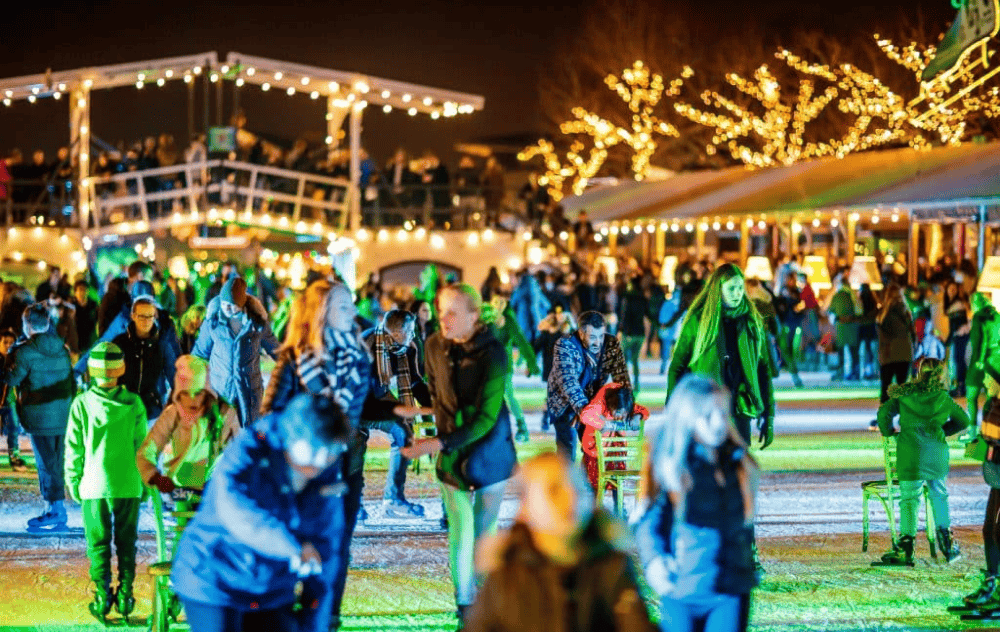
Skating opportunities at the Christmas Village., Christmas Market Amsterdam. Source: Winter Festival Amsterdam.

One of Amsterdam’s largest and most beloved Christmas markets – the Museumplein Christmas Market – is located in the heart of the city, surrounded by iconic museums and the Concertgebouw. With more than 50 stalls, the market offers a variety of Christmas gifts and food & drinks while visitors can enjoy bonfires and the festive atmosphere.

The market is open daily from December 3 to 27. The opening times are as follows: 3–24 dec: 12:00–21:00, 25–26 dec: 12:00–19:00 and 27 dec: 12:00–18:00.


2. Ice rink at Museumplein

Experience Amsterdam in true winter spirit with a visit to the ice rink at Museumplein. Surrounded by some of the city’s most famous museums, the rink offers a charming setting for an afternoon or evening of ice skating. Warm up afterwards with a hot drink or combine your visit with the nearby Christmas Village for an extra festive experience.

The ice rink is open daily from 24 October 2026 to 16 January 2027. From Monday to Thursday it is open from 12:00 to 21:00, on Friday and Saturday until 22:00, and on weekends it opens at 10:00. Admission is around €16 per person, including skate rental. Online booking is recommended, especially during weekends and the Christmas holidays.


3. Het Amsterdamse Winterparadijs

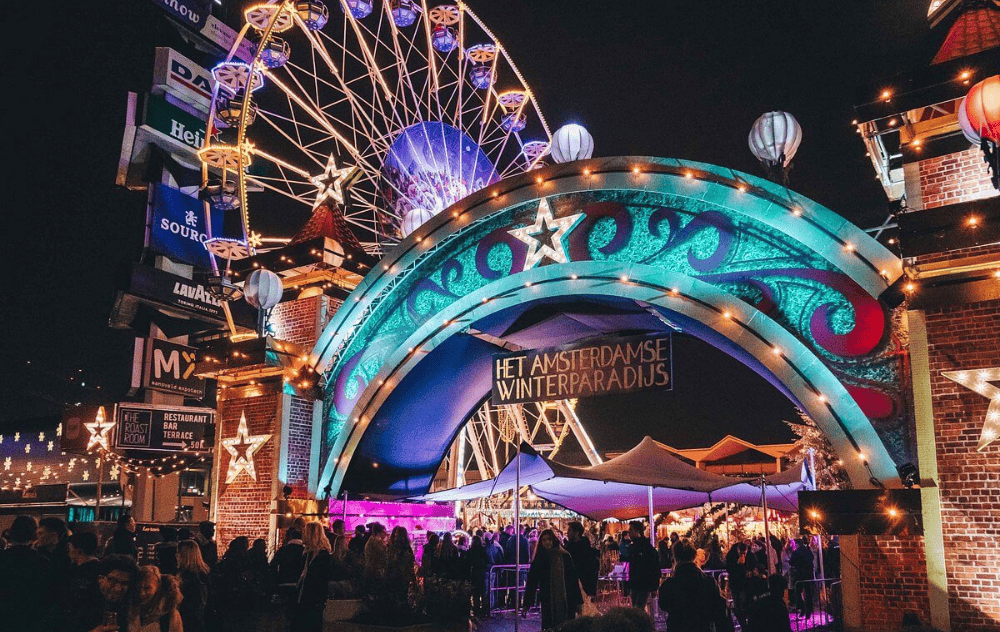
BlogsEntrance of Het Amsterdamse Winterparadijs.

The Amsterdam Winter Paradise is one of the largest and most popular winter events in the Netherlands. It is held annually in the RAI Amsterdam, The Winter Paradise offers a magical winter experience with an abundance of activities and attractions for young and old.

The market is open daily from December 17 to 3 January. Admission is between €19.50 and €30.50. The price depends on the day and time you come.


4. Amsterdam Light Festival

Blogs

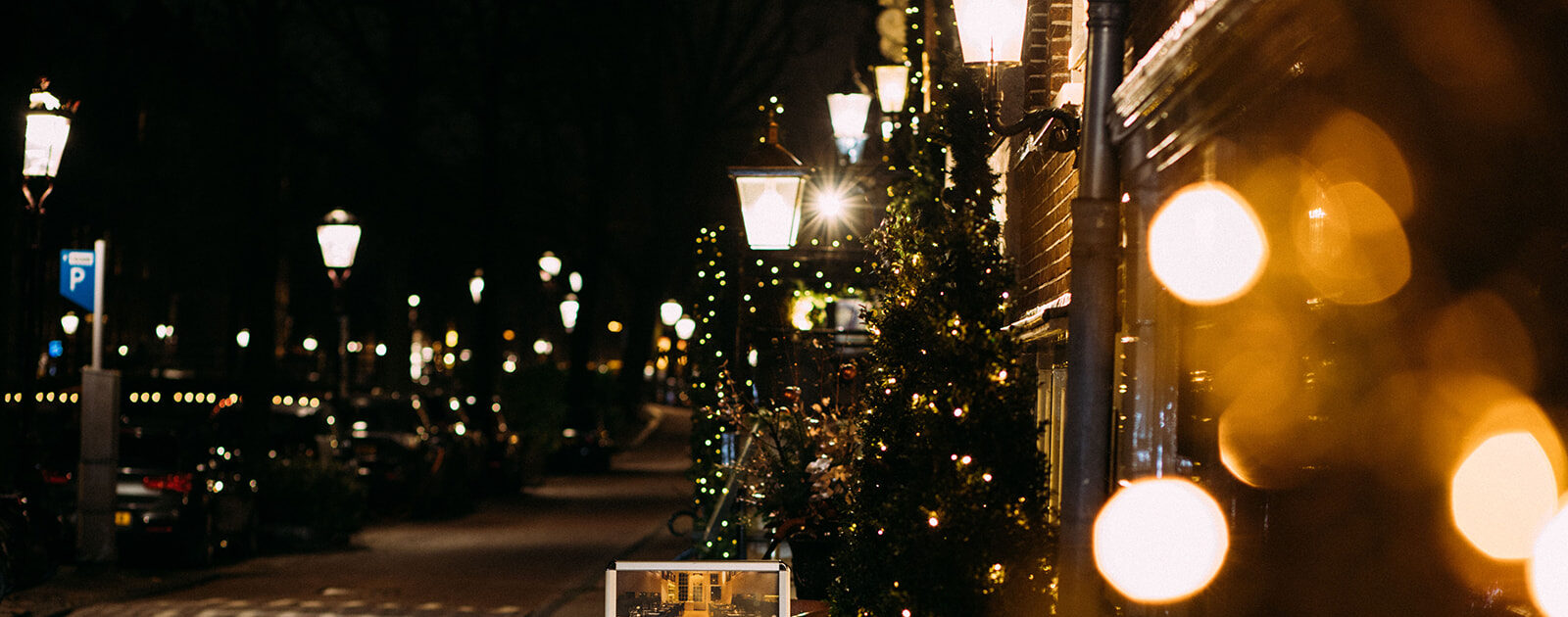
Beautiful lights along the canals. Source: Nogueira, R. Unsplash.

The Amsterdam Light Festival is an annual event that transforms the city into a spectacle of light art. From November 26 to January 17, Amsterdam’s canals, streets and squares light up with beautiful light installations that create a magical and festive atmosphere. A popular event for both locals and tourists, it has become a must-see attraction for anyone visiting Amsterdam during the winter months.


5. A boat tour to experience Amsterdam from the water

Blogs

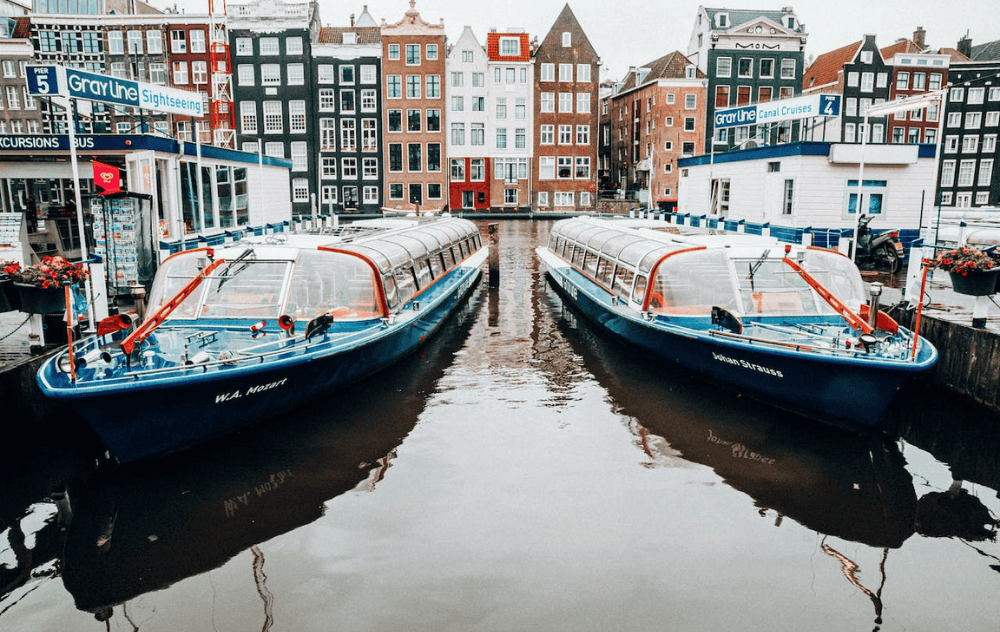
Boat tour through the beautiful canals of Amsterdam. Source: Kováčová, H.J. Pexels.

Take an unforgettable journey through the lighted wonderland of Amsterdam. Book your canal cruise today and experience the city’s festival of lights in all its enchanting splendor.

Ask our front office staff about all possibilities of booking a (private) boat tour.

Opera, Ballet and Circus


6. Royal Theatre Carré

Blogs

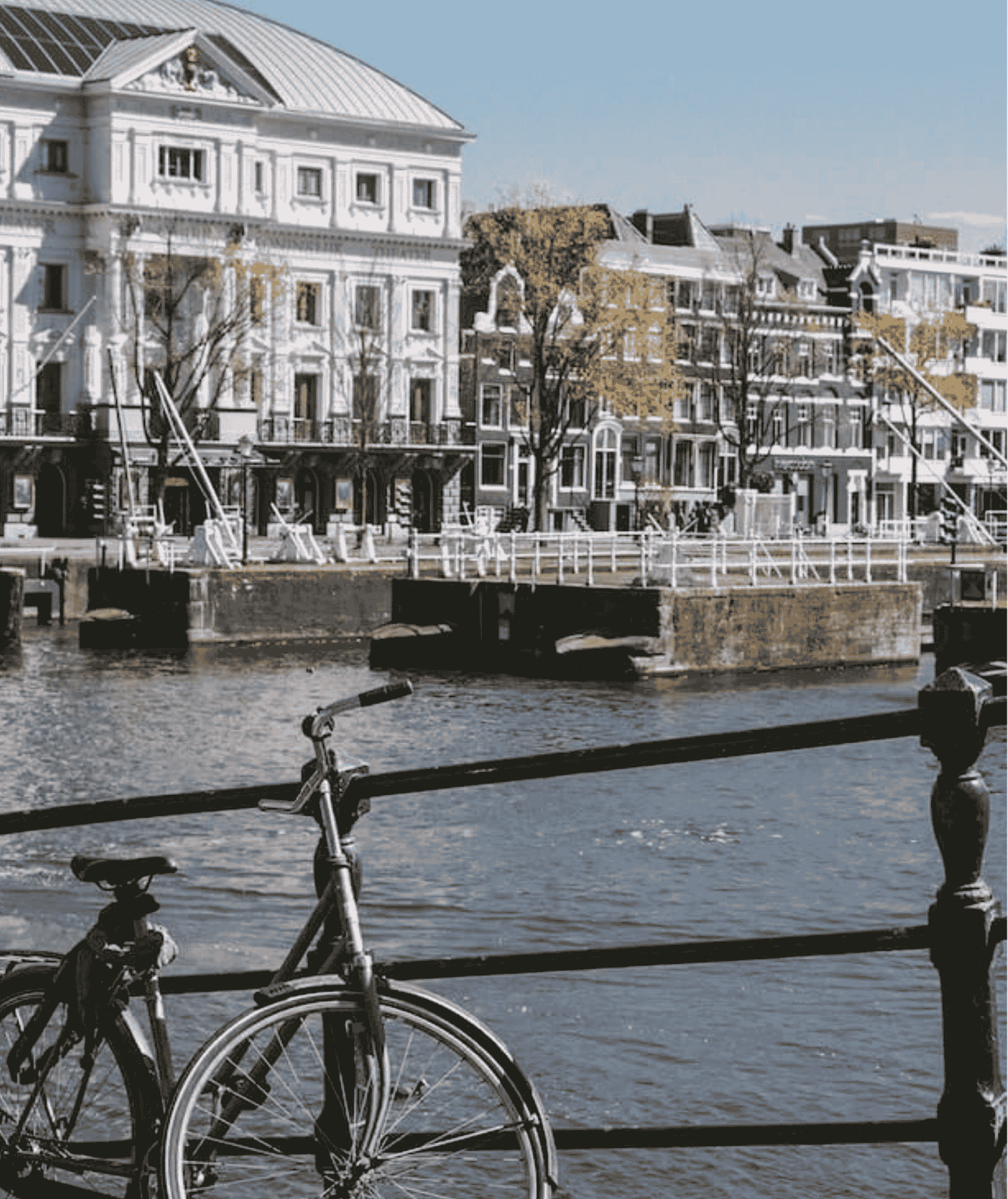
Outside view of royal theater Carré. Source: Van Vliet, L. Unsplash.

Step into the enchanting world of circus as the Royal Theatre Carré presents its famous annual World Christmas Circus. Witness the breathtaking feats of acrobats, clowns and dancers bringing the magic of circus to life. Admire the daring stunts, breathtaking acrobatics and the joyful atmosphere that emanates from the circus.


7. National Ballet

Blogs

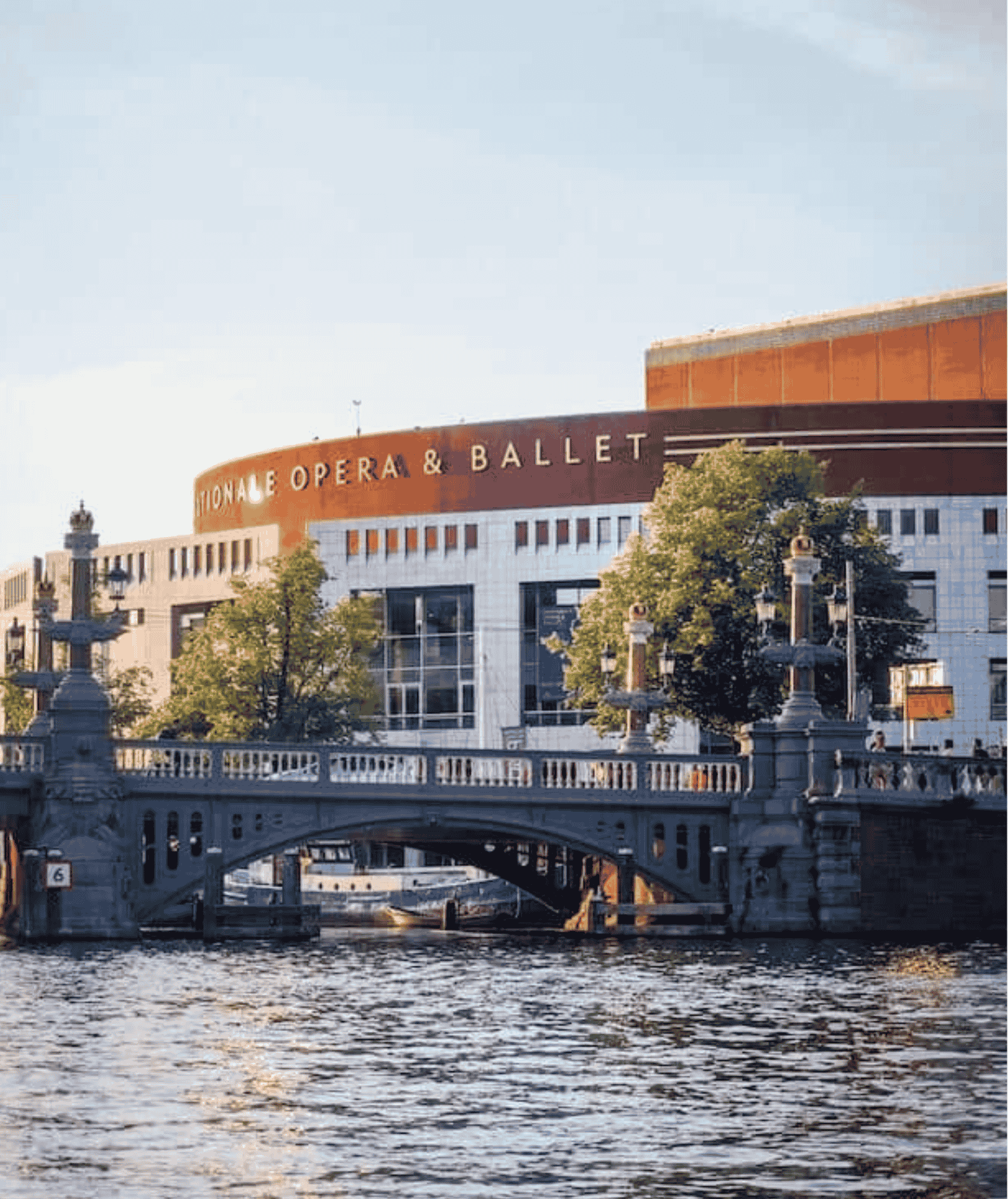
Raymonda and Die Zauberflöte are two classic works of art that have been enjoyed by audiences for generations. Both works are full of beauty, drama, and music that is sure to captivate and transport the viewer or listener.

For the performance schedule and ticket prices, visit the website of the Amsterdam National Opera Ballet.

During winter in Amsterdam you will find that there are plenty of activities and sights to explore. If you wish to receive more information you can download our online leaflet.  Should you want any help with booking tickets to any museum or guided tour, then please feel free to drop by our front desk. We would be happy to help you out. On behalf of the staff of the Ambassade Hotel, we wish you a pleasant stay and hope this blog helps you to get the most out of your visit to Amsterdam.

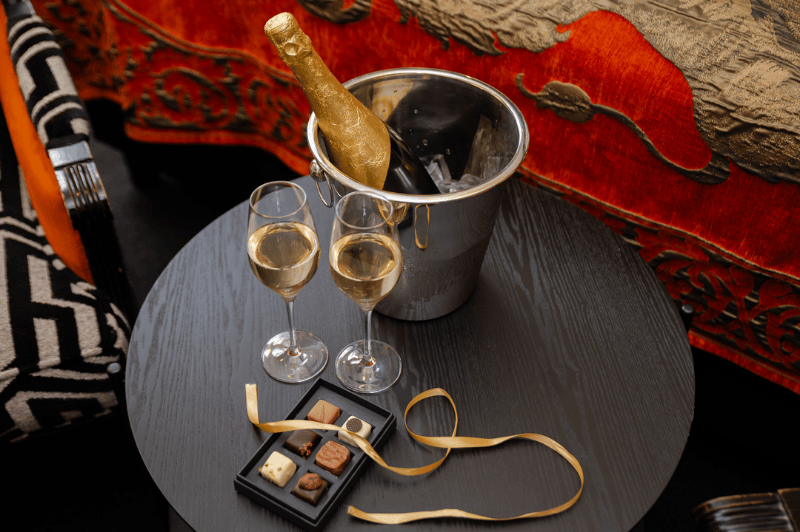
Cava et chocolats en cadeau de bienvenue dans la chambre à l’Hôtel Ambassade à Amsterdam – disponibles en option pour les clients.

VOIR LES OFFRES SPÉCIALES

Profitez pleinement de votre séjour avec l’un de nos forfaits spéciaux

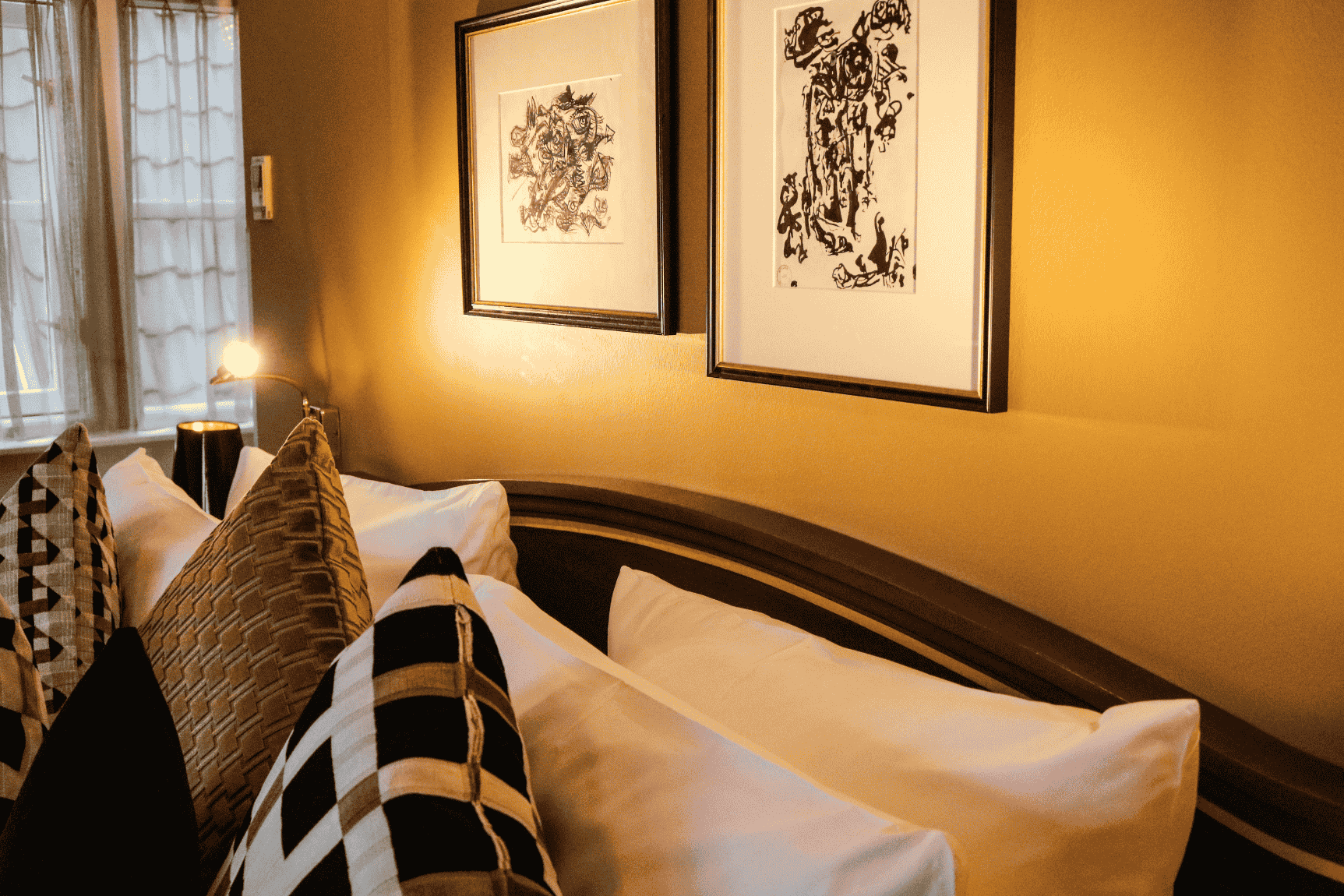
Détail du lit luxueux dans une grande suite de l’hôtel Ambassade à Amsterdam.

VOIR CHAMBRES & SUITES

Réservez directement sur notre site et bénéficiez du meilleur tarif disponible.

Arnon Grunberg

Arnon Grunberg (b.1971) is a widely discussed writer, essayist and columnist, with numerous publications in diverse newspapers and weekly magazines. His novels are often nominated for and awarded prizes, and have been translated into thirty languages. Prizes for his oeuvre include the Constantijn Huygens Prize and the Golden Goose Quill.

Blogs

Life and Theatre

‘In a love affair, most seek an eternal homeland. Others, but very few, eternal voyaging.’ (In einer Liebe suchen die meisten ewige Heimat. Andere, sehr wenige, aber das ewige Reisen.)

Actually, I wanted to include this quote by the German philosopher Walter Benjamin, who committed suicide on 26 September 1940 in Portbou, as the inscription of my new novel, but it even better suits a series of stories about the Ambassade Hotel in Amsterdam and thus, indirectly, all hotels, and the hotel existence itself.

How are we meant to understand an eternal homeland in the context of the love of one person? Could all nationalism be a sanctuary for people who sought in vain for their eternal homeland in one person, and when that ended in disappointment, turned to the country they happened to have been born in? Setting aside the question of exactly what love is eternal.

Presumably, it’s good to separate passion, which is eagerly consumed in hotel rooms, from love, which seeks its refuge sooner in living rooms and bedrooms, vestibules and storage spaces. It’s a human peculiarity, and a tragic one, to confuse passion with love, just like we wish to believe that freedom and equality are the same thing, or that one at least leads to the other.

It isn’t only in love, but in writing, in life, that I’ve found eternal voyaging. Where ‘eternal’ doesn’t need to mean anything more than life-long.

If love is bound up with a need to find a home, whatever that word may mean, and with the desire to travel, which by necessity means that one has to leave the metaphorical homeland, then it is inevitable that the hotel is a symbiosis of travel and home, heimat and exile. And thus, a compromise, but also a catalyst. This desire wishes to cross borders, and it is precisely the borderless character of the hotel that encourages us to do so.

Borderless, because the hotel is a halfway house. Room 93, Room 18 — we call them our rooms, but in a few days, someone else will be living there.

It’s theatre, just like the restaurant is theatre; everything is a ritual, certainly in a hotel, but the ritual has a high degree of reality. It transports us towards life, towards
the sensation of mortality and the transitory, which is presumably a precondition for being able to desire an eternal heimat in the first place.

The painter Charlotte Salomon, who was murdered in Auschwitz on 10 October 1943, posed the question: ‘Leben? Oder Theater?’ The hotel as institution, as reception centre, as hospital, as sanctuary, as guilty place and safe house, as a church and, lastly, as an illusion (the rooms of the other guests contain the lives that we might have lived). And the answer: Leben und Theater.

View the column on the website of ‘Het Parool’.

What is a writers’ hotel without writers? A pen without ink? For a period of six months in 2021, one author a week was invited to stay at the Ambassade Hotel and describe their writing lives at that time. Throughout the period May to November 2021, the newspaper Het Parool published the Writers’ Hotel columns in its weekly Arts Section.

Read more about this column project in collaboration with ‘Het Parool’ .

Would you like to stay at the writers’ hotel as well? Enjoy a unique experience in the Ambassade Hotel with these special offer packages or come and admire the library after a visiting our sunny terrace on the Herengracht!

Alma Mathijsen

Alma Mathijsen (b.1984) studied Image and Language at the Gerrit Rietveld Academie and Creative Writing in New York. She has published plays, a short story collection and various novels. Mathijsen writes essays for the NRC Handelsblad newspaper. In 2020, she published her most recent novel, Save the Summer.

Blogs

Into the Outside World

I’d almost forgotten that it still existed. I belong to that group of people who locked themselves away. If you live alone, that is pretty easy. You have no housemates to ask you lovingly, but also intently, whether it might not be a good idea to get out a little more.

No, I stayed inside, I bought a Nintendo and baked lasagnes exclusively for myself. Between the walls of my own apartment, I didn’t have to be frightened about infecting anyone, I didn’t have to ask a friend for the twelfth time whether they’d washed their hands for twenty seconds, I didn’t have to be irritated to distraction by a husband with his nose hanging over his face mask. It was calm at home, and that was all I needed. At least, that’s what I thought. I was invited to stay at the Ambassade Hotel for two nights, and naturally I could also bring someone with me. For the first time, there was somewhere I could invite my new love to.

The café terraces had just opened and the sun put in an appearance too. I saw people everywhere taking bites of their food, or eagerly drinking from their glasses. When they weren’t doing that, they were talking excitedly. The manager was standing ready at the entrance, and he welcomed me so warmly that I thought for a moment he must have confused me with an oil baron, or an influencer with 500,000 followers. In the room, there was a bottle of Cava waiting for us on a laid table that looked out over the canal. I drank from the glass, as eagerly as the people I’d seen earlier that day. I wanted to join in with them.

Thomas Heerma van Voss was also sitting on the terrace; he’d been invited to the hotel too. I’d barely seen any other writers for a year and a half, and I was seized with an enthusiasm that I couldn’t shake. I wanted to talk — it didn’t matter about what. A little later, Jessica Durlacher and Solomonica de Winter drifted over the terrace, returning from a massage; they were also staying in the hotel. And I wanted to chat with them too. I grabbed what was there to be grabbed. All of those months in solitary meant I was hungrier than ever for small talk. The sillier the better — I didn’t need any deep discussions.

It seemed almost like a literary festival, but with an élan that I’d dreamed about all of my life. No pallets in a mud pool as a so-called backstage. Here, we had marble floors, chilled bottles of bubbly and downy bathrobes with slippers. I couldn’t have wished for a better re-entry into life after sitting inside for months. I didn’t realise it, but it was everything I’d needed.

View the column on the website of ‘Het Parool’.

What is a writers’ hotel without writers? A pen without ink? For a period of six months in 2021, one author a week was invited to stay at the Ambassade Hotel and describe their writing lives at that time. Throughout the period May to November 2021, the newspaper Het Parool published the Writers’ Hotel columns in its weekly Arts Section.

Would you like to stay at the writers’ hotel as well? Enjoy a unique experience in the Ambassade Hotel with these special offer packages or come and admire the library after a visiting our sunny terrace on the Herengracht!

Read more about this column project in collaboration with ‘Het Parool’.

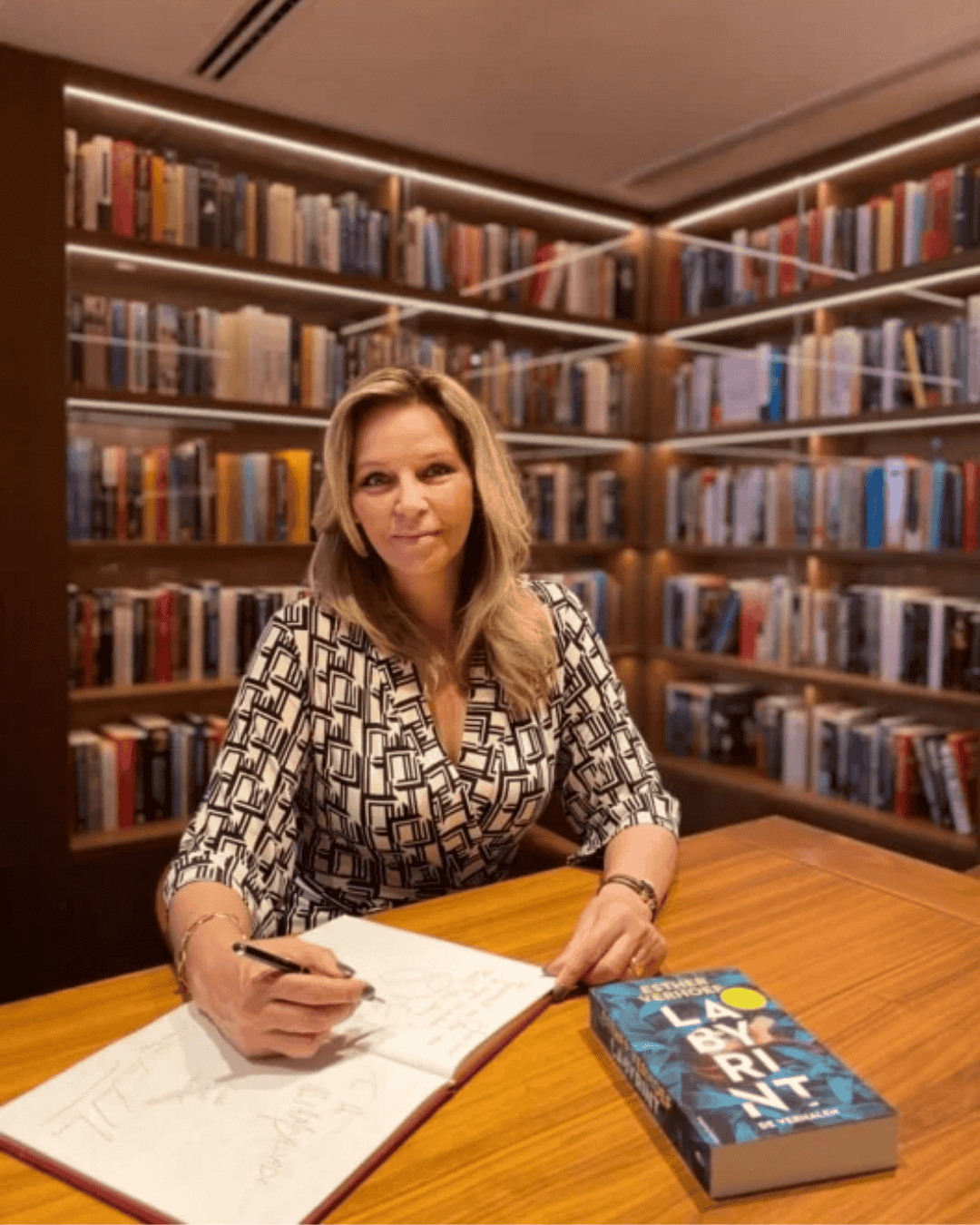
Esther Verhoef

Esther Verhoef (b.1968) is one of the most successful and versatile writers in the Netherlands. She has sold some 2.4 million copies of her psychological thrillers and novels. Verhoef’s work has been published in numerous countries and has been nominated for and won prizes on numerous occasions, including the NS Public Prize, the Hebban Award and the Golden Noose.
Blogs

The Shutters Are Closed

‘All of us have increasingly turned inwards,’ my writing friend says. She gestures as if she’s closing shutters in front of her face. ‘Everyone on their own little island. Furtive, frightened of the drifting bacteria on the breath of others.’

I sit opposite her with a big glass of Chardonnay. My second. The stricter the rules get, the higher my drinks tab. My friend is in a high-risk group, but now she’s had her second jab, and I’m just recovering from two weeks of last-minute Corona. So, it’s all allowed again now. We even hugged — faces turned away, because you never know.

‘I’ve transformed into a hermit that dreads human contact,’ she continues. ‘Someone who has to re-learn how to welcome guests. Didn’t that go quickly?’

I nod and take a sip. And another. I’ve always escaped into my writing, every day since I was eight; disappeared behind words and sentences, absorbed in a world that you create yourself, and that you can understand and control.

‘There are some people who I haven’t seen for a year and a half,’ I say. ‘You know, friends who you go out to a film with for the discussion afterwards, or you like to go shopping with, or go out to lunch with at some hip place.’

And at a certain moment, you don’t dare to invite anyone anymore, I think, because one of them will clasp you to their chest as you come in, snorting: ‘You don’t believe in all that nonsense, do you?!’ And another will promptly give you the cold shoulder just because you want to have two guests, while Jaap and Mark from the government advise only one.

I didn’t even message my firm, casual friends. What are you supposed to ask? Is everyone healthy, are you all managing there? I miss them, and then again I don’t. I’m no longer used to people, I think. My house’s shutters are closed, and so are my heart’s a little.

This must be an ideal time for writers, I keep reading everywhere. Because they were already sitting at home the whole time, typing. Nothing’s changed for them. But for me, everything’s changed. I write in seclusion. Four or five days without social contact is normal. So now and then I need to get out to make sure I don’t end up babbling under a stone. Hopsy, off to a café, a restaurant, the shops, a festival, places where you can tap off a few drops of social structure as an antidote. And hear a story or two, input for your work.

But everything is fully booked up, or regulated to death, and people have gone stark-raving mad, screaming at the tops of their voices at each other on either side of a ravine, where you could once have found the safe, middle ground.

Rapprochement — I hope that we can learn that again. Houses and hearts open, understanding, nuance and trust. A new, firm foundation in that middle ground, that’s what I wish for the reader, the writer, each and every person.

And until then, there’s always Chardonnay.

View the column on the website of ‘Het Parool’.

What is a writers’ hotel without writers? A pen without ink? For a period of six months in 2021, one author a week was invited to stay at the Ambassade Hotel and describe their writing lives at that time. Throughout the period May to November 2021, the newspaper Het Parool published the Writers’ Hotel columns in its weekly Arts Section.

Would you like to stay at the writers’ hotel as well? Enjoy a unique experience in the Ambassade Hotel with these special offer packages or come and admire the library after a visiting our sunny terrace on the Herengracht!

Read more about this column project in collaboration with ‘Het Parool’.

Jessica Durlacher


Jessica Durlacher (b.1961) has written novels that include The Hero (filmed and awarded the Opzij Literature Prize), Conscience (awarded the Debutant’s Prize and the Golden Dog-Ear), The Daughter (nominated for the NS Public Prize) and Emoticon. Her new novel, The Voice, was published in 2021.

Blogs

Writing in the Time of Corona

I recently happened to be a guest as a writer in Amsterdam, at the Ambassade Hotel, in one of the finest locations, facing the former Institute of Dutch Studies, where I once started my degree. I was amazed at how polished and gleaming the city can be, and how naturally it can conceal itself in the disguise that it probably displays to strangers.

Amsterdam is the city that I think I know best of all the cities I’ve lived in. I was born there, and spent the first thirty years of my life there. I studied and worked there, and it’s where I experienced all kinds of firsts. When I think of the city, or when I’m there, I always feel homesick — not for any places, but for moments, or periods. Amsterdam is a tin-full of madeleine cookies, a map of significant moments, a time machine. At the time, I could no longer see the city because I was a part of it.

But even now that I live elsewhere, the city feels like my own territory, homesickness territory, although I did still often go there before Corona. Time breaks apart memories, but it sometimes sticks them together too. Until a few weeks ago, the year and a half behind us seemed as though it were composed of all the same time, the same week, the same hour. I could remember every hour, every thought, I was present everywhere.

We were all furtive, introverted people without much life outside the house, we hated our masks with a similar passion, each day we briefly and dejectedly lowered our expectations; there was little stimulation, pleasures were close to home, there wasn’t much for us to strive for because the chance that others were having a much better time was reassuringly and depressingly small.

This was all one time, and it was called Corona. There was little to cheer us. Never had a long year felt so monotonous, the passing of time so visibly unaffected by what we found important. We watched the hours, the days, the weeks and the months pass
like never before.

Meanwhile, it now seems that we can pass into a new age; the gate is open, they’ve once again taken our possessions out of the safe for us. Awkwardly, we stick our noses into the fresh air, the open shops, the cafés and the museums. The light still stings our eyes a bit, our social muscles are a little wasted, and we react to most things that happen to us with a mild shock. Are we the same as we were before?

The Corona year may have crumpled our memories into a wad; the gaping gap between the time before the pandemic and now has grown exponentially. My wardrobe looks like a stranger’s. Who was the ‘I’ that wore such awkwardly high heels?

Amsterdam (and we) have acquired a whole new history, but I do wonder whether this time it will arouse any homesickness. Maybe just for the Ambassade Hotel.

View the column on the website of ‘Het Parool’.

What is a writers’ hotel without writers? A pen without ink? For a period of six months in 2021, one author a week was invited to stay at the Ambassade Hotel and describe their writing lives at that time. Throughout the period May to November 2021, the newspaper Het Parool published the Writers’ Hotel columns in its weekly Arts Section.

Read more about this column project in collaboration with ‘Het Parool’.
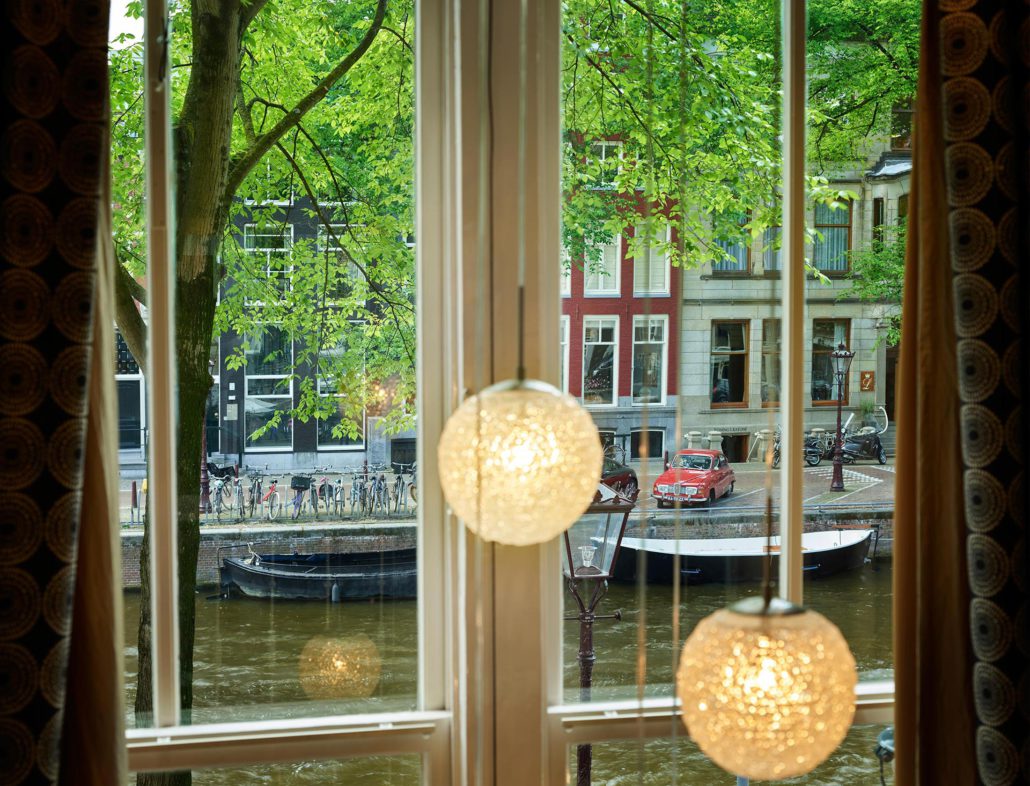
Would you like to stay at the writers’ hotel as well? Enjoy a unique experience in the Ambassade Hotel with these special offer packages or come and admire the library after visiting our sunny terrace on the Herengracht!

Thomas Heerma van Voss


Thomas Heerma van Voss (b.1990) is the writer of the widely acclaimed novels The Everything Table and Stern. His short story collection The Third Person was nominated for the Biesheuvel Prize; his essay collection Surrogates was nominated for the Jan Hanlo Essay Prize. He also writes for publications
such as De Groene Amsterdammer magazine.

Blogs

Shaken Awake

Below the bridge that runs from the Prins Hendrikkade across the Singel canal, there is a sentence by Belle van Zuylen, painted on a brick wall: Returning isn’t the same as staying. These six words always draw my attention as I walk from Central Station into the city, on my way home through that urine-reeking tunnel, where a couple of homeless people have been living since the Corona outbreak — and each time I think that Belle van Zuylen was right.

Maybe that’s what I found personally the most difficult thing about the Corona waves; the lack of variety, or any relief in the days, so that even the sensation of returning disappeared. Never again did I take in what I already knew with a fresh perspective; each day passed more or less the same. Now and then, I checked my diary, and it wasn’t a day that had passed, but a month.

For some writers, this is an ideal situation: rest, a regular routine, and above all, few distractions. I personally fare best when my perspective is shaken up every now and then, and if I have a reason to leave my writing room. When the time came for my temporary stay at the Ambassade Hotel, I immediately felt that Amsterdam had finally been given new hues and colours. A different starting point ensured that I saw different places, I heard new sounds, extra bustle around me. I browsed through the hotel’s illustrious library, abandoned myself to each dish that the hotel chef cooked, slept at night in a bed that was so big I kept losing my love. How I’d missed being in a semi-public space like this: the mixing of the other guests and one’s own privacy, the compactness and luxury of your own room, which you didn’t have to decorate yourself, the discretion of the staff who never arrived unannounced, but were always there at the ready.

With the Ambassade Hotel as my new mooring, I wandered through the city; the sun was shining, the café terraces were being set up for the first time in months. On the far side of the canal, they were shooting the excellent American TV series, Atlanta; I walked up to the set, lied to security that I lived a little further along, passed Donald Glover and the other lead actors, just half a metre away — another experience that I hadn’t had in ages: pleasant, being a little nervously surprised by what you come across,that delightful tingling in your belly, not knowing
precisely where and what to look at.

Once I was back in my hotel room, I felt as if I’d been shaken awake, as if I’d finally returned from somewhere. And I experienced something I hadn’t in ages: I felt like being alone again for a little while, to search in seclusion for the right words, because that was finally a choice again, not something that was forced upon me by circumstance.

View the column on the website of ‘Het Parool’.

What is a writers’ hotel without writers? A pen without ink? For a period of six months in 2021, one author a week was invited to stay at the Ambassade Hotel and describe their writing lives at that time. Throughout the period May to November 2021, the newspaper Het Parool published the Writers’ Hotel columns in its weekly Arts Section.

Read more about this column project in collaboration with ‘Het Parool’.

Would you like to stay at the writers’ hotel as well? Enjoy a unique experience in the Ambassade Hotel with these special offer packages or come and admire the library after visiting our sunny terrace on the Herengracht!