
Things to see in Amsterdam: what to book ahead, what is free and what you can combine
Which sights in Amsterdam should you book in advance?
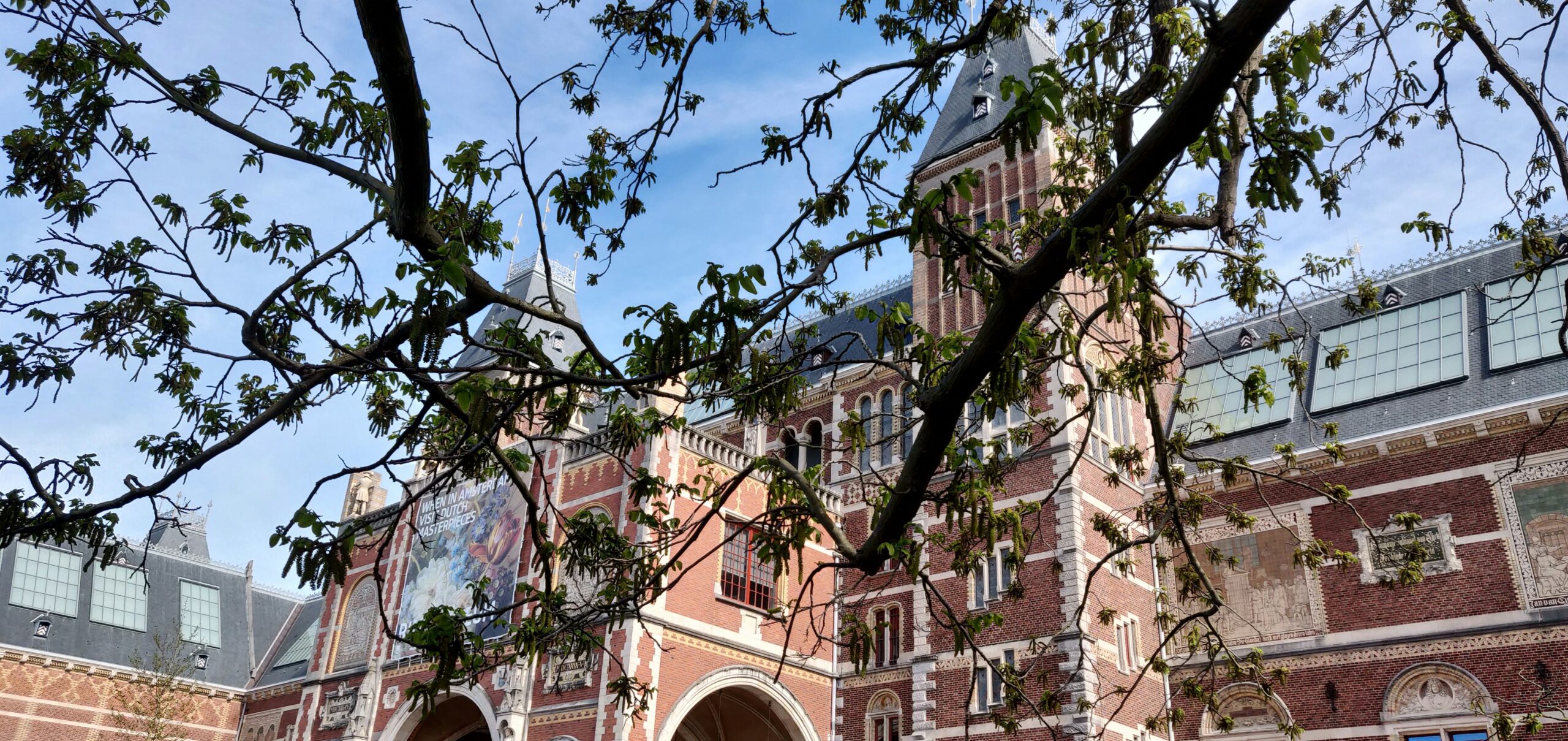
For the Anne Frank House, the Rijksmuseum and the Van Gogh Museum, you reserve a time slot online. At the Rijksmuseum this applies to every visitor, including Museumkaart holders. The Anne Frank House sells no tickets at the door, not even for children or Museumkaart holders.
How does ticket sales for the Anne Frank House work?
Tickets for the Anne Frank House are sold exclusively through annefrank.org, always with a time slot. Every Tuesday at 10:00, tickets are released for visits six weeks later.
Those six weeks mark the moment new dates open, not a final deadline. Dates released earlier that have not sold out remain available to book. The museum is open daily from 9:00 to 22:00, and evening slots tend to remain available longer than mornings. If your date is sold out, the museum itself advises checking again after Tuesday afternoon in the week before your visit, as additional tickets may be released.
• Adults €16.50, ages 10 to 17 €7.00, ages 0 to 9 €1.00, all including a €1.00 booking fee
• With a Museumkaart you pay €1.00. The I amsterdam City Card offers no discount here
• Open daily from 9:00 to 22:00
• A visit takes about an hour, and the audio tour is included
• For an additional €7.00 per ticket, you can book a 30-minute introductory programme, suitable from age 10
• Tickets are issued in your name and cannot be exchanged or refunded
• The museum entrance is at Westermarkt 20, a ten-minute walk from Dam Square
Do check the opening days before you go. On a few days a year the museum closes or keeps shorter hours; annefrank.org lists these dates in advance.
A practical tip from our front desk. Many of the questions we receive concern the Anne Frank House and the Van Gogh Museum. The Van Gogh Museum in particular often proves difficult to arrange at the last minute. Our advice is therefore simple: if you know you would like to visit either, reserve before you travel to Amsterdam.
Which sights in Amsterdam are free?
One of the great pleasures of Amsterdam is that many of its most characteristic places charge no admission. Indeed, one of the finest experiences the city offers, a walk through the historic Canal Ring, is entirely free.
We often encourage guests to make time for the places between the museums. That is where you discover everyday Amsterdam.
Free sights we are happy to recommend:
• The Canal Ring, with the Singel, Herengracht, Keizersgracht and Prinsengracht
• The Nine Streets, the shopping district that links the four canals
• The Begijnhof near the Spui, a secluded courtyard in the heart of the city
• The Flower Market on the Singel
• The Vondelpark, the largest city park in Amsterdam
• The Albert Cuyp Market in De Pijp
These six will fill a day without admission fees. A walk through the Canal Ring and the Nine Streets, followed by the Flower Market and the Begijnhof, easily fills half a day without buying a single ticket.
Which sights are in the city centre and which are not?
Most of Amsterdam’s sights lie within or just outside the Canal Ring. Only ARTIS, Amsterdam in Motion, the Wereldmuseum, the NDSM Wharf and the Cobra Museum call for public transport or a ferry.
That distinction shapes how you plan your day. Within the Canal Ring you walk from one place to the next and lose hardly any time between visits. Once you leave the ring, travel time comes into play.
Our location and contact page explains how to reach the different parts of the city from the Herengracht.
• Within the Canal Ring: the Anne Frank House, the Royal Palace, De Nieuwe Kerk, the Begijnhof, the Flower Market, the Westerkerk, Our Lord in the Attic, Museum Van Loon, Museum Willet-Holthuysen, Het Grachtenmuseum, the Amsterdam Museum (temporarily closed) and the Nine Streets
• Just outside the Canal Ring: the Rijksmuseum, the Van Gogh Museum, the Stedelijk Museum, the Moco Museum, the Vondelpark and the Albert Cuyp Market
• Outside the centre: ARTIS, the Wereldmuseum, the STRAAT Museum, A’DAM Lookout, Amsterdam in Motion and the Cobra Museum in Amstelveen
What can you see in Amsterdam when it rains?
On a rainy day, Amsterdam simply moves indoors, and your plans lose very little. The major museums, the historic canal houses and the smaller museum churches are all under cover. The only thing that changes is the crowds: museums fill up in poor weather, so it is wise to reserve your time slot a day earlier than you otherwise might.
Which museums are best on a rainy day?
All of Amsterdam’s major museums are entirely indoors and can be visited without any change of plan.
• The Rijksmuseum, Van Gogh Museum, Stedelijk Museum and Moco Museum, all four on Museumplein and within walking distance of one another
• The Anne Frank House on the Prinsengracht, open daily from 9:00 to 22:00
• The Wereldmuseum in East, the STRAAT Museum at the NDSM Wharf and Amsterdam in Motion in West, all indoors but outside the centre
A great advantage of Museumplein is that its four museums lie close together. Is one sold out, or not quite what you had in mind? Within minutes you are at an alternative.
Which smaller indoor places are worth a visit in the rain?
Beyond the major museums, Amsterdam has a number of historic houses that come into their own in poor weather, as the visit takes place entirely indoors and the rooms are intimate and warm.
• Our Lord in the Attic on the Oudezijds Voorburgwal, a church hidden in the attic of a canal house
• Museum Van Loon on the Keizersgracht, a canal house furnished as a family home
• Museum Willet-Holthuysen on the Herengracht
• Het Grachtenmuseum, a three-minute walk from the Ambassade Hotel
All four lie within the Canal Ring and can be reached on foot, which counts for more in the rain than on a sunny day.
What can you do when the museums are full?
Other options well worth a visit:
• The Concertgebouw, a few minutes’ walk from Museumplein. The hall has welcomed audiences since 1888 and is celebrated above all for its acoustics. Alongside the evening concerts, there are free lunchtime concerts, usually on Wednesdays at 12:30, with the exception of July and August. More information is available here.
• The Pannenkoekenboot, a pancake cruise across the IJ, passing the A’DAM Tower, the EYE Filmmuseum and This is Holland. On board the covered boat, freshly baked pancakes are served with an unlimited selection of sweet and savoury toppings.
A canal cruise is a fine alternative in the rain, as most canal boats are covered (Flagship boats are an exception). If you would rather stay completely dry, there is no need to leave the Canal Ring. At the Ambassade Hotel you will find a wellness centre, a library and a brasserie just a few steps from one another.
• Koan Float in the Nine Streets, for a floating or Red Light Therapy session. You can read more in our article on Koan Float
• The Library Bar of the hotel, with more than 5,000 books, all signed by authors who stayed here
• Brasserie Ambassade, open seven days a week for breakfast, lunch and dinner, surrounded by oil paintings from the CoBrA collection
For those who see the rain as a reason to immerse themselves in art: the hotel’s collection includes more than 800 works from the CoBrA movement, displayed in the corridors and in the rooms. You can read more under art and literature.
Which lesser-known sights in Amsterdam are worth a visit?
Two of the places our front desk likes to recommend lie on the same canal as the hotel: Art Zoo Museum at Herengracht 368 and Proeflokaal A. van Wees at Herengracht 319, both a short walk away.
Art Zoo Museum, further along the Herengracht
Art Zoo Museum is a tribute to the animal world that has little in common with a conventional museum. Hundreds of taxidermy animals are arranged into scenes in the spirit of the Dutch Golden Age, created by the artists Darwin, Sinke & Van Tongeren. A cheetah leaps from an antique tabernacle, and a crocodile of almost five metres hangs from the ceiling.
The building itself deserves attention too. The museum is housed in the Cromhout Houses, seventeenth-century canal houses designed by Philips Vingboons for Jacob Cromhout. The ceiling paintings by Jacob de Wit remain in their original state, as do the staircase and two preserved kitchens from the same century.
A jenever tasting next door
Proeflokaal A. van Wees at Herengracht 319 is the tasting room of the Amsterdam distillery A. van Wees De Ooievaar, founded in 1883, and open daily from 12:00. A jenever tasting covers the history of Amsterdam jenever, the Dutch forerunner of gin, as well as the distilling process and, of course, the tasting itself. Groups of up to twelve can reserve directly through the website.
The tasting room occupies a former stable, with a nineteenth-century water pump that once drew cooling water from the canal and is the only one in the Netherlands still in its original place. We like to mention it to guests who are considering the Heineken Experience. Both are worth a visit, but here you taste something made only in Amsterdam.
Two places just outside the centre
Brouwerij ’t IJ is one of Amsterdam’s best-known craft breweries, located beneath a historic windmill in the east of the city. Organic beers are brewed on site and, on fine days, enjoyed on the terrace by the water. Every Friday, Saturday and Sunday at 15:00, an English-language tour beneath the windmill explains the brewing process and the story of the brewery.
Amsterdam in Motion at the Westergas Culture Park was created to celebrate 750 years of Amsterdam. A fifteen-minute multimedia show on the world’s largest city scale model tells the story of the city, followed by an interactive exhibition.
Canal houses you would never notice from the street
• Museum Van Loon on the Keizersgracht, a canal house furnished as a family home
• Museum Willet-Holthuysen on the Herengracht, with a formal garden behind the house
• Our Lord in the Attic, a church hidden in the attic of a canal house
Which sights can you combine in one day?
Sights are best combined by area. Three combinations together cover most of what visitors wish to see in Amsterdam.
A morning in the Canal Ring
1. Begin in the Nine Streets and walk towards the Prinsengracht
2. Visit the Anne Frank House at your reserved time slot
3. Continue to the Westerkerk and on into the Jordaan
4. Finish on Dam Square, at the Royal Palace and De Nieuwe Kerk
This route stays within the Canal Ring and requires no transport.
Tip from our front desk: if you walk this route on a Monday or a Saturday, pay a visit to the Noordermarkt. This neighbourhood market in the heart of the Jordaan is a fabric and textile market on Mondays and an organic farmers’ market on Saturdays, frequented above all by Amsterdammers themselves. End at Winkel 43 on the square, with a slice of the apple pie it is famous for, on the terrace at the edge of the Jordaan.
An afternoon in the Museum Quarter
1. The Rijksmuseum or the Van Gogh Museum, not both on the same day
2. A walk through the Vondelpark
3. Optionally, the Stedelijk Museum or the Moco Museum
Two major museums in one day almost always leads to museum fatigue. One museum and a park works better than two museums.
A day in Amsterdam-Noord
1. Take the free ferry from Amsterdam Central Station
2. Visit the NDSM Wharf and the STRAAT Museum
3. End at A’DAM Lookout for the view over the city
Noord is the only area in this overview for which you truly leave the centre. Allow half a day to a full day.
Would you prefer to discover the city with a guide rather than on your own? Take a look at our private tours. A quiet moment between two visits is close at hand, as we describe in our article on Koan Float.
Which sights can you skip?
No sight is truly superfluous, but three considerations regularly spare visitors a disappointment.
- Two major museums in one day. Attention fades after two to three hours, and the second museum becomes little more than a corridor of paintings.
- A canal cruise during the busiest afternoon hours. Early in the morning or towards sunset, the water is far quieter.
- A day trip outside the city during a two-night stay. The travel time then costs you one of your two full days.
Tip from our front desk: two destinations come up more often than others when guests return, and in both cases the alternative is closer than guests expect.
Giethoorn is the first. The village is popular, and you notice this on arrival: on busy days, the tranquillity people come for is hard to find. On top of that, the journey takes up a considerable part of the day. If you would like to be on the water, a canal cruise through the centre of Amsterdam is often the better choice. Companies such as Pure Boats sail through the Canal Ring, and within ten minutes of disembarking you are back at your hotel.
The Flower Market is the second. The market on the Singel appears on almost every list of sights, but its offer is strongly geared towards visitors, and many guests walk through it more quickly than expected. If you would like to see a market where Amsterdammers do their own shopping, head for the Noordermarkt in the Jordaan: on Mondays for fabrics and textiles, on Saturdays for the organic farmers’ market.
Where is the best place to stay for seeing Amsterdam’s sights?
Staying within the Canal Ring saves travel time to almost every sight in this overview. The Ambassade Hotel lies on the Herengracht, in the heart of the Nine Streets, about a five-minute walk from both Dam Square and the Jordaan.
The hotel is a place with a collection of its own: more than 5,000 books signed by their authors in the Library Bar, and over 800 works from the CoBrA movement in the corridors and rooms. You can read more under art and literature. Looking for activities rather than sights? You will find them in our article on 10 things to do in Amsterdam.
Discover our rooms and suites for a stay in the heart of Amsterdam.