
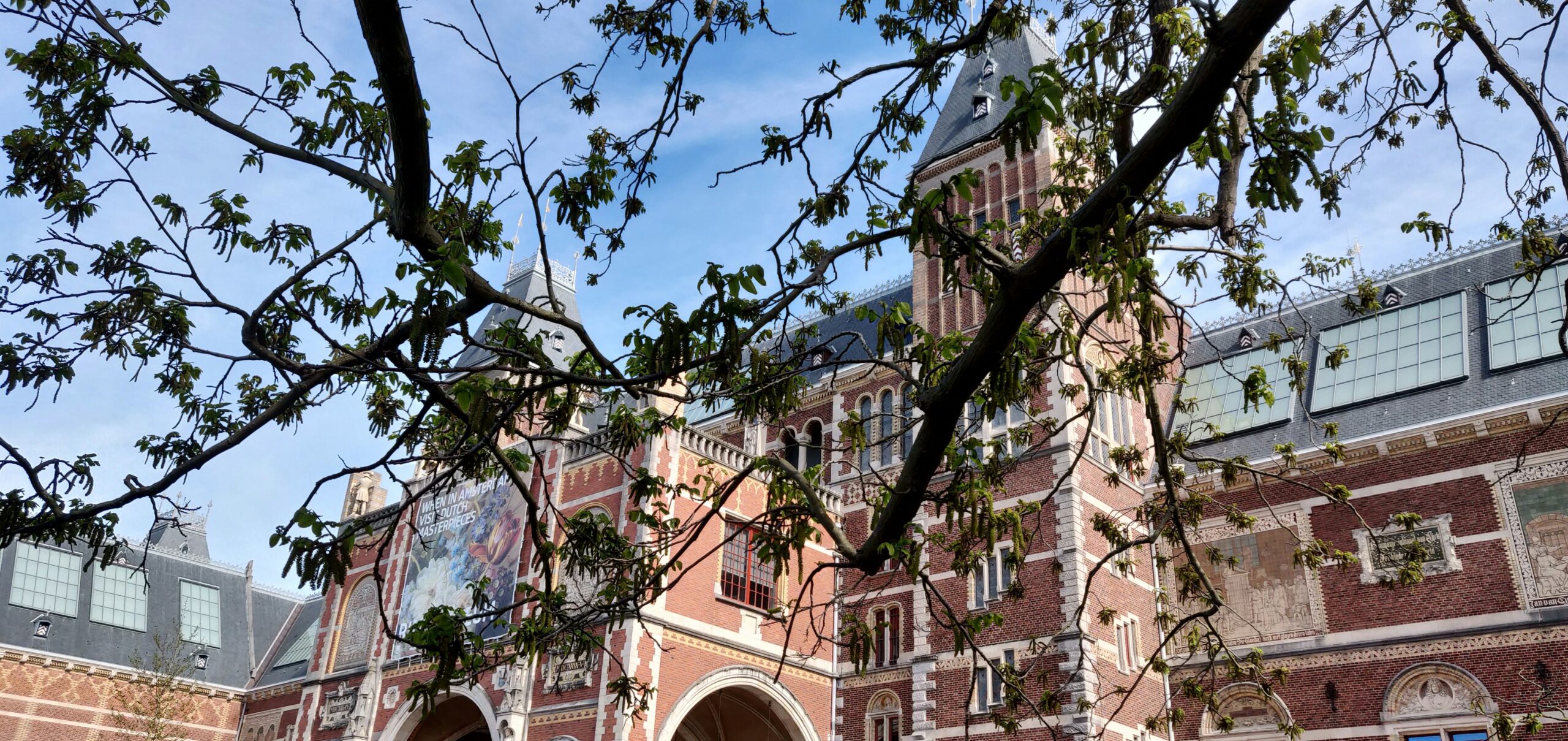
Things to see in Amsterdam: what to book ahead, what is free and what you can combine
Which sights in Amsterdam should you book in advance?
For the Anne Frank House, the Rijksmuseum and the Van Gogh Museum, you reserve a time slot online. At the Rijksmuseum this applies to every visitor, including Museumkaart holders. The Anne Frank House sells no tickets at the door, not even for children or Museumkaart holders.
How does ticket sales for the Anne Frank House work?
Tickets for the Anne Frank House are sold exclusively through annefrank.org, always with a time slot. Every Tuesday at 10:00, tickets are released for visits six weeks later.
Those six weeks mark the moment new dates open, not a final deadline. Dates released earlier that have not sold out remain available to book. The museum is open daily from 9:00 to 22:00, and evening slots tend to remain available longer than mornings. If your date is sold out, the museum itself advises checking again after Tuesday afternoon in the week before your visit, as additional tickets may be released.
• Adults €16.50, ages 10 to 17 €7.00, ages 0 to 9 €1.00, all including a €1.00 booking fee
• With a Museumkaart you pay €1.00. The I amsterdam City Card offers no discount here
• Open daily from 9:00 to 22:00
• A visit takes about an hour, and the audio tour is included
• For an additional €7.00 per ticket, you can book a 30-minute introductory programme, suitable from age 10
• Tickets are issued in your name and cannot be exchanged or refunded
• The museum entrance is at Westermarkt 20, a ten-minute walk from Dam Square
Do check the opening days before you go. On a few days a year the museum closes or keeps shorter hours; annefrank.org lists these dates in advance.
A practical tip from our front desk. Many of the questions we receive concern the Anne Frank House and the Van Gogh Museum. The Van Gogh Museum in particular often proves difficult to arrange at the last minute. Our advice is therefore simple: if you know you would like to visit either, reserve before you travel to Amsterdam.
Which sights in Amsterdam are free?
One of the great pleasures of Amsterdam is that many of its most characteristic places charge no admission. Indeed, one of the finest experiences the city offers, a walk through the historic Canal Ring, is entirely free.
We often encourage guests to make time for the places between the museums. That is where you discover everyday Amsterdam.
Free sights we are happy to recommend:
• The Canal Ring, with the Singel, Herengracht, Keizersgracht and Prinsengracht
• The Nine Streets, the shopping district that links the four canals
• The Begijnhof near the Spui, a secluded courtyard in the heart of the city
• The Flower Market on the Singel
• The Vondelpark, the largest city park in Amsterdam
• The Albert Cuyp Market in De Pijp
These six will fill a day without admission fees. A walk through the Canal Ring and the Nine Streets, followed by the Flower Market and the Begijnhof, easily fills half a day without buying a single ticket.
Which sights are in the city centre and which are not?
Most of Amsterdam’s sights lie within or just outside the Canal Ring. Only ARTIS, Amsterdam in Motion, the Wereldmuseum, the NDSM Wharf and the Cobra Museum call for public transport or a ferry.
That distinction shapes how you plan your day. Within the Canal Ring you walk from one place to the next and lose hardly any time between visits. Once you leave the ring, travel time comes into play.
Our location and contact page explains how to reach the different parts of the city from the Herengracht.
• Within the Canal Ring: the Anne Frank House, the Royal Palace, De Nieuwe Kerk, the Begijnhof, the Flower Market, the Westerkerk, Our Lord in the Attic, Museum Van Loon, Museum Willet-Holthuysen, Het Grachtenmuseum, the Amsterdam Museum (temporarily closed) and the Nine Streets
• Just outside the Canal Ring: the Rijksmuseum, the Van Gogh Museum, the Stedelijk Museum, the Moco Museum, the Vondelpark and the Albert Cuyp Market
• Outside the centre: ARTIS, the Wereldmuseum, the STRAAT Museum, A’DAM Lookout, Amsterdam in Motion and the Cobra Museum in Amstelveen
What can you see in Amsterdam when it rains?
On a rainy day, Amsterdam simply moves indoors, and your plans lose very little. The major museums, the historic canal houses and the smaller museum churches are all under cover. The only thing that changes is the crowds: museums fill up in poor weather, so it is wise to reserve your time slot a day earlier than you otherwise might.
Which museums are best on a rainy day?
All of Amsterdam’s major museums are entirely indoors and can be visited without any change of plan.
• The Rijksmuseum, Van Gogh Museum, Stedelijk Museum and Moco Museum, all four on Museumplein and within walking distance of one another
• The Anne Frank House on the Prinsengracht, open daily from 9:00 to 22:00
• The Wereldmuseum in East, the STRAAT Museum at the NDSM Wharf and Amsterdam in Motion in West, all indoors but outside the centre
A great advantage of Museumplein is that its four museums lie close together. Is one sold out, or not quite what you had in mind? Within minutes you are at an alternative.
Which smaller indoor places are worth a visit in the rain?
Beyond the major museums, Amsterdam has a number of historic houses that come into their own in poor weather, as the visit takes place entirely indoors and the rooms are intimate and warm.
• Our Lord in the Attic on the Oudezijds Voorburgwal, a church hidden in the attic of a canal house
• Museum Van Loon on the Keizersgracht, a canal house furnished as a family home
• Museum Willet-Holthuysen on the Herengracht
• Het Grachtenmuseum, a three-minute walk from the Ambassade Hotel
All four lie within the Canal Ring and can be reached on foot, which counts for more in the rain than on a sunny day.
What can you do when the museums are full?
Other options well worth a visit:
• The Concertgebouw, a few minutes’ walk from Museumplein. The hall has welcomed audiences since 1888 and is celebrated above all for its acoustics. Alongside the evening concerts, there are free lunchtime concerts, usually on Wednesdays at 12:30, with the exception of July and August. More information is available here.
• The Pannenkoekenboot, a pancake cruise across the IJ, passing the A’DAM Tower, the EYE Filmmuseum and This is Holland. On board the covered boat, freshly baked pancakes are served with an unlimited selection of sweet and savoury toppings.
A canal cruise is a fine alternative in the rain, as most canal boats are covered (Flagship boats are an exception). If you would rather stay completely dry, there is no need to leave the Canal Ring. At the Ambassade Hotel you will find a wellness centre, a library and a brasserie just a few steps from one another.
• Koan Float in the Nine Streets, for a floating or Red Light Therapy session. You can read more in our article on Koan Float
• The Library Bar of the hotel, with more than 5,000 books, all signed by authors who stayed here
• Brasserie Ambassade, open seven days a week for breakfast, lunch and dinner, surrounded by oil paintings from the CoBrA collection
For those who see the rain as a reason to immerse themselves in art: the hotel’s collection includes more than 800 works from the CoBrA movement, displayed in the corridors and in the rooms. You can read more under art and literature.
Which lesser-known sights in Amsterdam are worth a visit?
Two of the places our front desk likes to recommend lie on the same canal as the hotel: Art Zoo Museum at Herengracht 368 and Proeflokaal A. van Wees at Herengracht 319, both a short walk away.
Art Zoo Museum, further along the Herengracht
Art Zoo Museum is a tribute to the animal world that has little in common with a conventional museum. Hundreds of taxidermy animals are arranged into scenes in the spirit of the Dutch Golden Age, created by the artists Darwin, Sinke & Van Tongeren. A cheetah leaps from an antique tabernacle, and a crocodile of almost five metres hangs from the ceiling.
The building itself deserves attention too. The museum is housed in the Cromhout Houses, seventeenth-century canal houses designed by Philips Vingboons for Jacob Cromhout. The ceiling paintings by Jacob de Wit remain in their original state, as do the staircase and two preserved kitchens from the same century.
A jenever tasting next door
Proeflokaal A. van Wees at Herengracht 319 is the tasting room of the Amsterdam distillery A. van Wees De Ooievaar, founded in 1883, and open daily from 12:00. A jenever tasting covers the history of Amsterdam jenever, the Dutch forerunner of gin, as well as the distilling process and, of course, the tasting itself. Groups of up to twelve can reserve directly through the website.
The tasting room occupies a former stable, with a nineteenth-century water pump that once drew cooling water from the canal and is the only one in the Netherlands still in its original place. We like to mention it to guests who are considering the Heineken Experience. Both are worth a visit, but here you taste something made only in Amsterdam.
Two places just outside the centre
Brouwerij ’t IJ is one of Amsterdam’s best-known craft breweries, located beneath a historic windmill in the east of the city. Organic beers are brewed on site and, on fine days, enjoyed on the terrace by the water. Every Friday, Saturday and Sunday at 15:00, an English-language tour beneath the windmill explains the brewing process and the story of the brewery.
Amsterdam in Motion at the Westergas Culture Park was created to celebrate 750 years of Amsterdam. A fifteen-minute multimedia show on the world’s largest city scale model tells the story of the city, followed by an interactive exhibition.
Canal houses you would never notice from the street
• Museum Van Loon on the Keizersgracht, a canal house furnished as a family home
• Museum Willet-Holthuysen on the Herengracht, with a formal garden behind the house
• Our Lord in the Attic, a church hidden in the attic of a canal house
Which sights can you combine in one day?
Sights are best combined by area. Three combinations together cover most of what visitors wish to see in Amsterdam.
A morning in the Canal Ring
1. Begin in the Nine Streets and walk towards the Prinsengracht
2. Visit the Anne Frank House at your reserved time slot
3. Continue to the Westerkerk and on into the Jordaan
4. Finish on Dam Square, at the Royal Palace and De Nieuwe Kerk
This route stays within the Canal Ring and requires no transport.
Tip from our front desk: if you walk this route on a Monday or a Saturday, pay a visit to the Noordermarkt. This neighbourhood market in the heart of the Jordaan is a fabric and textile market on Mondays and an organic farmers’ market on Saturdays, frequented above all by Amsterdammers themselves. End at Winkel 43 on the square, with a slice of the apple pie it is famous for, on the terrace at the edge of the Jordaan.
An afternoon in the Museum Quarter
1. The Rijksmuseum or the Van Gogh Museum, not both on the same day
2. A walk through the Vondelpark
3. Optionally, the Stedelijk Museum or the Moco Museum
Two major museums in one day almost always leads to museum fatigue. One museum and a park works better than two museums.
A day in Amsterdam-Noord
1. Take the free ferry from Amsterdam Central Station
2. Visit the NDSM Wharf and the STRAAT Museum
3. End at A’DAM Lookout for the view over the city
Noord is the only area in this overview for which you truly leave the centre. Allow half a day to a full day.
Would you prefer to discover the city with a guide rather than on your own? Take a look at our private tours. A quiet moment between two visits is close at hand, as we describe in our article on Koan Float.
Which sights can you skip?
No sight is truly superfluous, but three considerations regularly spare visitors a disappointment.
- Two major museums in one day. Attention fades after two to three hours, and the second museum becomes little more than a corridor of paintings.
- A canal cruise during the busiest afternoon hours. Early in the morning or towards sunset, the water is far quieter.
- A day trip outside the city during a two-night stay. The travel time then costs you one of your two full days.
Tip from our front desk: two destinations come up more often than others when guests return, and in both cases the alternative is closer than guests expect.
Giethoorn is the first. The village is popular, and you notice this on arrival: on busy days, the tranquillity people come for is hard to find. On top of that, the journey takes up a considerable part of the day. If you would like to be on the water, a canal cruise through the centre of Amsterdam is often the better choice. Companies such as Pure Boats sail through the Canal Ring, and within ten minutes of disembarking you are back at your hotel.
The Flower Market is the second. The market on the Singel appears on almost every list of sights, but its offer is strongly geared towards visitors, and many guests walk through it more quickly than expected. If you would like to see a market where Amsterdammers do their own shopping, head for the Noordermarkt in the Jordaan: on Mondays for fabrics and textiles, on Saturdays for the organic farmers’ market.
Where is the best place to stay for seeing Amsterdam’s sights?
Staying within the Canal Ring saves travel time to almost every sight in this overview. The Ambassade Hotel lies on the Herengracht, in the heart of the Nine Streets, about a five-minute walk from both Dam Square and the Jordaan.
The hotel is a place with a collection of its own: more than 5,000 books signed by their authors in the Library Bar, and over 800 works from the CoBrA movement in the corridors and rooms. You can read more under art and literature. Looking for activities rather than sights? You will find them in our article on 10 things to do in Amsterdam.
Discover our rooms and suites for a stay in the heart of Amsterdam.
Frequently asked questions about sights in Amsterdam
How many sights does Amsterdam have?
Is there a top 10 of things to see in Amsterdam?
How much time do you need for the main sights in Amsterdam?
Is the Museumkaart or the I amsterdam City Card better value?
Do you need to book all museums in Amsterdam in advance?
Can you reach Amsterdam’s sights by public transport?
Which sights in Amsterdam are suitable for children?
Can you see Amsterdam’s sights in one day?
What do guests most often ask our front desk about sights?
 Brasserie Ambassade – Joie de vivre in Amsterdam
Brasserie Ambassade is the restaurant at the Ambassade Hotel, which has been impressing diners since it opened in 2015. The restaurant prides itself on quality and service. The kitchen team creates French classics using the finest ingredients, and the courteous staff are ready to oblige day and night. ‘It’s French joie de vivre in a unique spot, with a view of Herengracht and a colourful backdrop of works by the artists of the international CoBrA movement,’ says chef Tommy van de Coolwijk proudly, as we ask him about his love of French cuisine and the success of this restaurant in such an enviable location.
— So Brasserie Ambassade is oriented towards French cuisine? —
‘You can tell by the name. French Mediterranean cuisine has a long tradition of wonderful dishes and is renowned for its refinement and variety. I love the fact that I can express my passion for French cuisine through the menu. I always choose dishes you wouldn’t tend to make at home. All our food is prepared with finesse, plated beautifully, and served in just the right way. We also have a great wine list with reasonable prices, and we pay a lot of attention to food and wine combinations.’
— You can tell that the management and your team have achieved something special from the rave reviews and high ratings on TripAdvisor and TheFork. —
‘It’s because of our careful attention to service and quality, and the excellent price-quality ratio. Our guests particularly value the depth of flavour in our dishes and the variety on the menu: from a wonderful house-made bisque or salade au chèvre at lunchtime to a steak tartare or a refined confit de canard at dinner.’
— These days, sustainability is an important issue. A growing number of diners are eating less meat or none at all. How do you respond to this trend? —
‘French cuisine traditionally has many meat and fish dishes, but we see that there’s a growing demand for vegetarian dishes. So we always have more than one vegetarian starter and main dish on the menu. As far as possible, we also use seasonal ingredients, which we buy sustainably from local suppliers whenever we can.’
— In everything you say about your work as a chef, one thing stands out: your passion for the guests. Can you say something more about that? —
‘The main ambition of everybody here, both the kitchen team and the front of house, is to satisfy our guests. We want them to have a fantastic evening, to pamper them, and make them feel they haven’t wanted for anything. I go home satisfied if I see they’ve appreciated the quality of our food and it’s clear they’ve had a good time because of all the care and attention they’ve received. That’s what we’re interested in at Brasserie Ambassade, not all the latest restaurant fashions. Although, as chefs, of course we do keep up to date with that!’
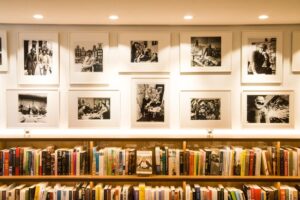
“CoBrA stole my heart” | Art at Ambassade Hotel
The Ambassade Hotel is synonymous with art. There are artworks to admire throughout the building, even in the guestrooms. How did this come about? The man behind it is Wouter Schopman, passionate hotelier and inspired art collector.
It was in 1988 that Wouter Schopman wandered into De Nieuwe Kerk in Amsterdam, curious about the exhibition COBRA 40 years after. He took one look at the art, and it was love at first sight. Schopman couldn’t get enough of it, and he revisited the exhibition several times.
‘COBRA stole my heart… It took my breath away to see so much surprising work,’ says Schopman as he looks back on that decisive day, 31 years ago. ‘The colours, the freedom, the playfulness, the unconventionality, the experiment, the intuition… it was overwhelming, the passion flew off the canvas. I was rooted to the spot, covered in goose bumps. What passion and courage these artists had – and in the years just after the war, too! Even after all that time, their work had lost none of its power.’
From hotelier to art collector
It wasn’t long before Schopman bought his first COBRA work: a print by Eugène Brands. It was the start of a collection which – thanks to contributions by Schopman’s friend Mieny Pes and her husband Luigi – now comprises more than 800 works, making it one of the largest private COBRA collections on public display in the world. It includes work by Constant, Karel Appel, Corneille, Eugène Brands, Lucebert, Anton Rooskens and, last but not least, Theo Wolvecamp, whose work is central to the collection and with whom Schopman developed a special connection.
Theo Wolvecamp
Schopman met Theo Wolvecamp (1925-1992) in Ascona while visiting a close friend, the art collector Alice de Jong. She and her late husband had assembled an extraordinary collection of contemporary art. From the moment Wolvecamp set foot in Alice’s home, Schopman hung on his every word. They talked about art for days and went on to see each other frequently at Schopman’s own Ambassade Hotel. Over the years, Schopman bought various works from Wolvecamp, who is known as ‘the quiet strength of COBRA’.
Quiet strength
Wolvecamp is rarely the first of the Dutch COBRA artists to be mentioned; Karel Appel, Constant and Corneille tend to steal the show. This is understandable in the light of Wolvecamp’s personality: he was introverted, critical and somewhat ponderous. Is this the reason he is less well known? Were the other COBRA members simply better at ‘selling themselves’, while actually looking up to Wolvecamp?
Wolvecamp enrolled at the art academy in Arnhem in 1947, but soon abandoned the academic lessons. He moved to Amsterdam, where he made a series of improvised compositions. It was COBRA work avant la lettre, which was appreciated by Corneille, Appel and Constant. Wolvecamp continued to draw and paint in this free and spontaneous way for the rest of his life.
To Wouter Schopman, his work still embodies the power of COBRA, the movement he fell in love with on that day in 1988.
 Amsterdam Sinfonietta – Passion for music
Anyone who has ever been to a concert by Amsterdam Sinfonietta will have been struck by the musicians’ energy and enthusiasm. They play standing up, without a conductor. This calls not only for rigorous rehearsal, but also for intense interaction on the part of the orchestra members. The approach to performing gives the orchestra its unique signature: a perfectly coordinated ensemble, bursting with passion for music.
The Netherlands’ only professional string orchestra, Amsterdam Sinfonietta, has seen its popularity grow in recent years. Artistic director and violinist Candida Thompson puts this down to changes in society: ‘Music is always connected to social circumstances. For a long time it was fashionable to impress people with big orchestras in concert halls. These days people are looking for more personal and intimate experiences, without such a distance to the audience, in the way that chamber music used to be played. We’re actually a large chamber ensemble.’
Amsterdam Sinfonietta’s repertoire incorporates a wide variety of genres, from baroque to contemporary. As well as performing mainstream repertoire, the orchestra champions lesser-known or new works and participates in crossover projects. ‘We collaborate with artists, actors and dancers, and we experiment with lighting as it’s used in theatre, but then very subtly,’ Thompson says.
When it comes to the current musical climate in the Netherlands, however, Thompson has her concerns: ‘Musical tradition is an incredibly important part of our culture and for years it’s been neglected because of cutbacks. Music education is important. It’s like football or drawing: you only get interested if you come into contact with it.’
This is why Amsterdam Sinfonietta is committed to music education, and gives 50 performances a year for children aged four to six. The orchestra also offers conservatory students the opportunity to play with the ensemble, and runs an annual Sinfonietta String Players Day for musicians aged seven to fourteen. The Ambassade Hotel sets great store by these activities, and not only sponsors the orchestra, but also provides financial support to the talented young violinist Svenja Staats.
For more than 30 years, Amsterdam Sinfonietta has been the only professional string orchestra in the Netherlands, and it ranks among the best in the world. The ensemble is made up of 23 string players with a variety of nationalities, all of whom play at soloist level. Amsterdam Sinfonietta works with celebrated musicians such as Barbara Hannigan, Sol Gabetta, Janine Jansen, Isabelle Faust, Jasper de Waal, Martin Fröst, Alexander Melnikov, Christianne Stotijn, Bobby McFerrin, Wende and Blaudzun.
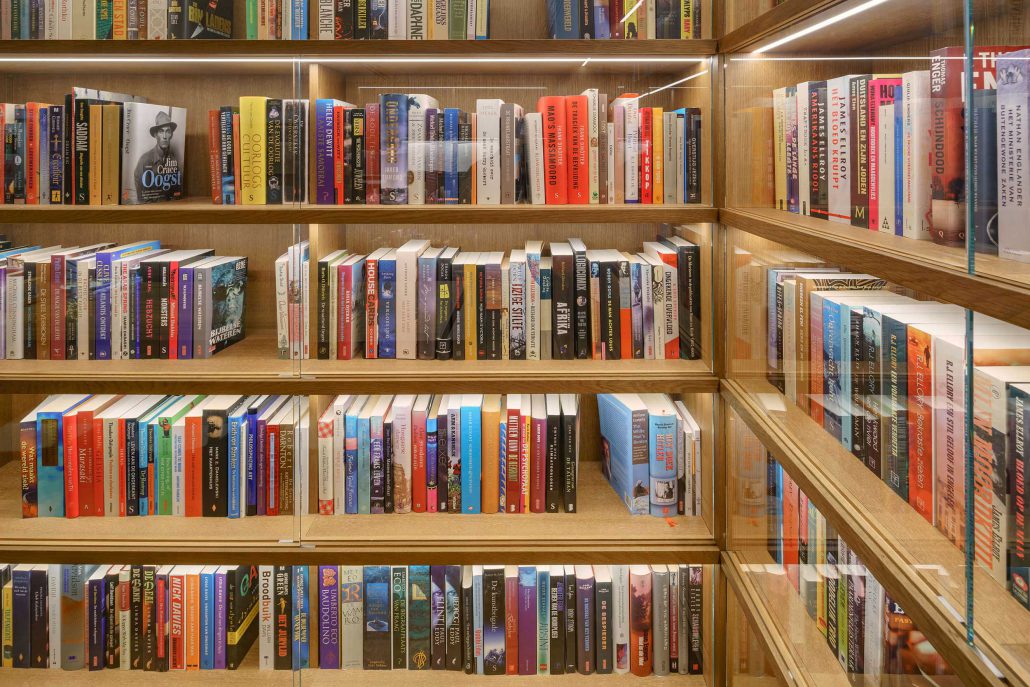
A column from Arnon Grunberg – “Magic Show”
‘“As other men long for hearth and home, or wife and child, he would always return to neon light and reception, chambermaid and porter,” is how he puts it in his serial ‛Hotelwelt’ [Hotel World],’ Mark Schaevers notes of the writer Joseph Roth (1894-1939) in his excellent book ‘Ostend, the summer of 1936’ (Oostende, de zomer van 1936).
Although most hotels no longer have a porter, and it is a long time since neon light has been a feature of the hotel world, I share this idiosyncrasy with Joseph Roth: I long for hotels. A good hotel combines familiarity, a certain sense of security, with the temporary, the indefinite. A hotel is a halfway house.
Since I left Amsterdam in 1995, I have regularly returned to the city – work, mother, lover etcetera, there have always been reasons, too many reasons in fact.
Via a couple of detours, among them the ‘Flowering Radish’ (Bloeiende Ramenas) on Haarlemmerdijk and the Amstel Hotel, I ended up at the Ambassade Hotel, where I found what I was looking for.
It would be too much to recount my history at the Ambassade Hotel, and it would also be indiscreet – a hotel owes its existence in part to secret and clandestine meetings, although the clandestine nature of the meeting is often only a product of one’s own imagination – but in particular I would like to mention my godson’s eighth birthday, which he celebrated there in the summer of 2012, with entertainment by the magician Falicanto.
I had given birthday parties for him at the Ambassade before – after all, the hotel was where I lived when I was in Amsterdam – and after the first of them, Wim, who more than any other member of staff is to me the personification of the Ambassade Hotel, had confided that they had found confetti all over the hotel for days afterwards. So I had gone in search of other sources of amusement – he was a little old for confetti anyway – and with some help I had found Falicanto.
The magician agreed to come, some 15 boys and girls were invited for the show, and I eagerly played the role of host and surrogate father to my godson.
The children had installed themselves in the breakfast-cum-reception room with cake and soft drinks. A proportion of the cake had swiftly been rubbed into the carpet and some of the chairs, but that’s the advantage of a hotel: people expect stains. All guests make stains, only some less than others.
The children, who by this point had been informed that the magician was coming, had the air of spectators at the Colosseum, interested to see people being mauled by wild animals, the only difference being that a few of my godson’s friends were keen to play the role of the wild animal themselves.
One boy said to me, ‘I don’t like magicians, can I go and play at the back?’
‘No,’ I said. If one of the boys went to play ‘at the back’, they would all go and play at the back, and the magician would be left to perform his tricks for a couple of stray adults, I couldn’t do that to him.
The magician arrived, a thin, shy man who said he might have to cut the performance short because his girlfriend was ill. I became even more concerned that my godson’s sweet little friends would metaphorically tear him to pieces. The opposite happened, and diffidently he won their hearts, or at least their admiration.
A hotel, I realise, is also a conjuring trick. The staff do the magic, if all goes well the guests don’t see how the tricks are done, and they go home satisfied, wanting nothing more than to come back soon, because although there is a lot at home, there generally aren’t any real magicians.
Home is to a good hotel as sliding doors are to a wide stage.
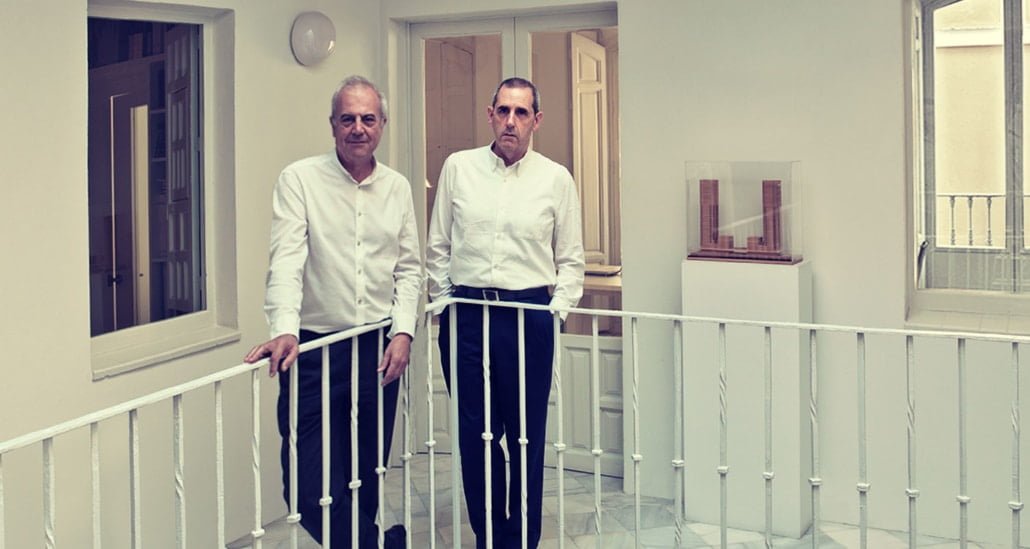
Cruz y Ortiz – Internationally renowned architects
The Ambassade Hotel is made up of 16 canal houses dating from the 17th and 18th centuries, nearly all of them connected. Over the years, the internal structure had lost something of its original character, so in 2014, Cruz y Ortiz were commissioned to remodel the public areas and create more unity. The design was to incorporate a brasserie and lounge/bar, and give pride of place to the extraordinary collections of signed books and COBRA art.
For Antonio Ortiz, a loyal guest, the commission had a special significance. He knows the Ambassade Hotel’s unique character well: stylish yet homely, both classic and timeless, with impeccable service from approachable staff. ‘Remodelling historic buildings is a challenging process,’ Ortiz says. ‘What function should go where? How do you harmonise the interior with the architecture? What’s more, according to planning law, individual buildings have to remain recognisable as such from the outside. To bring this all together in a good design requires a lot of careful tuning. It makes the process an exciting journey of exploration.’
The design
To reveal the original layout of the houses, Cruz y Ortiz reduced the size of the existing openings in the dividing walls, and added a new one. The passages were aligned along a single axis to create unity and coherence among the different spaces. ‘With historic buildings, this is the desirable and respectful approach,’ Ortiz says. ‘The connections between the buildings were actually reduced, so they are more individually identifiable, but still form a whole.’
The Ambassade Hotel’s inextricable association with art and literature is evident throughout. Guests are welcomed at the entrance by a COBRA sculpture in a gold niche – a subtle but telling prelude to the rest of the rooms, where art is beautifully integrated into the interior. The extensive collection of signed books has been given the space it deserves in the fittingly named Library Bar and Library Lounge.
 Sustainable Enterprise – Green Globe and closing the loop
The Ambassade Hotel always seeks to offer its guests the very highest quality, and strongly believes that quality and sustainability go hand in hand. That’s why sustainable enterprise is a spearhead of hotel policy.
Two years ago the Ambassade Hotel was awarded a Green Globe Certificate in recognition of its measures to promote sustainability. But the hotel’s ambitions don’t end there. The Ambassade Hotel is a member of the Circular Hotels Leaders Group, 12 hotels that have been asked by the City of Amsterdam to explore opportunities for circular business practices. Recommendations have been made based on calculations of the hotel’s carbon footprint, and there is still a lot to be gained in the areas of energy consumption, food, furnishings and laundry. And although waste represents only a fraction of the total footprint, the mindset is that in the future there will be no such thing as waste, and all the materials we use will be part of a closed cycle.
Closing the loop is no simple matter, but our strength lies in cooperation.
If hotels apply circular purchasing principles and treat waste as a resource, the hotel sector in Amsterdam can play a pioneering role in making the city sustainable.
In conversation with Stine Jensen – The importance of attention

Philosopher, writer and television programme maker Stine Jensen was the guest in the January edition of the Ambassade Hotel’s literary interview series, Literaire Salon @ Ambassade Hotel. Writer and journalist Chris Keulemans talked to her about her essay ‘First Love’, which was commissioned for this year’s Spirituality Month. The essay combines an account of Jensen’s experience of first love with philosophical and spiritual reflections on love in relation to attention.
First Love
What can you remember about the first time you were in love? Hopefully, it was an all-embracing experience of complete attention. All your attention was focused on the other person, and theirs on you. But is that what really happens?
When Stine Jensen looks back at her first love Mark, she arrives at a different conclusion. Mark showered her with attention. Every day she would receive long letters, which he would deliver through her letterbox. Much as she loved this, she never wrote back. One day the letters stopped coming, and the self-doubt began. Had she done something wrong? Wasn’t she good enough anymore?
Now, in retrospect, Jensen sees that this first love wasn’t about her attention for Mark at all; it was her self-love that was being gratified. Isn’t it wonderful to feel that you’re special? And doesn’t it make you panic if the attention suddenly dries up! Significantly, it works both ways. Mark’s letters weren’t declarations of love, but accounts of what he’d been doing that day. They were actually about him.
In the light of Jensen’s first love experience, it’s not hard to make a connection with today’s social media. We constantly post messages and photos to show the world how interesting and fun we are. We hope to receive likes and comments as a confirmation that we are seen by others. And what happens when we like something online ourselves? Do the things we like really have our attention, or is it simply another way of putting ourselves in the limelight, in the hope that other people notice us? These are uncomfortable and confrontational questions.
But what is attention, actually? And what does it do?
Attention
Attention is a genuine and sincere interest in something or someone. Not seeing but looking, not hearing but listening, and not thinking but feeling. It is this form of attention that fosters love – in whatever form – and it is vital for long- term relationships. Without real attention for the other person, love soon dies.
Looking and listening
When you fall in love for the first time, you usually haven’t learnt this yet, and the attention you give and receive is principally a means for your insecure pubescent brain to seek reassurance. But over the years, most of us discover that to nourish true love, you need to pay less attention to yourself and more to the other person.
In an age when our pinging phones constantly beg for our attention, this is often where the problem lies. How much time do we spend truly looking at and listening to other people? Whether they’re our partners, our children, our friends, or even strangers. And if love thrives on real attention, isn’t it high time we went analogue now and again? Philosopher Stine Jensen thinks so. She argues that we owe it to ourselves to live more consciously and offer one another our genuine attention.
For the love of the guest – A home away from home
The staff at the Ambassade Hotel are hospitality experts. Both in their contact with the guests and behind the scenes, they put their hearts and souls into providing the best possible service. The emphasis lies on devoting time and attention to the guests, with a personal touch, so the hotel feels like a home away from home.
It’s time the reception assistants took a turn in the limelight. Their job is crucial: they look after luggage, show guests the way, provide room service, give information, and make sure the hotel is always looking its best. In cooperation with the reception staff, they also make any reservations the guests might want, and they have the hotel bikes ready and waiting on request. But their most important task is to give the guests a warm welcome and ensure they have a carefree stay.
‘We’re the guests’ first point of contact with the hotel, and first impressions count,’ says Ewout Smit, a reception assistant who has found his ideal job. ‘A warm and respectful reception is crucial. It’s so important that guests feel welcome from the moment they arrive, and that someone devotes time and attention to them. You need to be sensitive to the type of guest, and his or her culture.’
Wim Breden, who has worked at the Ambassade Hotel for years, nods in agreement.
‘The way you treat an elderly English aristocrat is quite different from the way you treat a jovial American.’
‘The longer you do this job, the more you develop feelers for it. You constantly have to work out the right approach and sense what each guest needs. At the Ambassade Hotel, we give people all the time and attention they need, and they really appreciate it. It’s not for nothing that guests regularly return. I’ve really developed a close relationship with many of them over the years.’
Wim has a colourful anecdote by way of illustration. ‘For years a famous high society lady from New York used to stay here. She was a flamboyant type, with cashmere scarves, and impeccable style. A couple of times a year I would pick her up from Schiphol Airport, where for her there was no such thing as waiting in line. She would simply walk through and nobody would stop her or say anything. She had such charisma and strength of personality, you couldn’t say no to her. But she had a heart of gold, and we had the most amazing conversations. As a token of her appreciation she invited me to come and visit her, but a month before I was due to go, I received the news that she’d passed away… I certainly shed a tear.’
Travel writer Rick Steves – “Travel is freedom”

De Amerikaan Rick Steves, regelmatig gast in het Ambassade Hotel, is in zijn land een autoriteit op het gebied van reizen in Europa. In zijn reisgidsen en tv-programma’s spoort hij de Amerikaanse toerist aan om buiten de gebaande paden te treden en andere culturen wérkelijk te ontdekken. Tevens is hij sociaal activist en filantroop.
— You are very well-known from your books and blogs about travelling all over the world. Why, for American people, is Amsterdam a nice place to visit? And did this change over the years? —
Amsterdam is a kind of fairy-tale Europe for many Americans: it’s amazingly well-preserved, provides a peek at Old World affluence, and serves up lots of cultural clichés. Combine that with a well-organized tourism welcome, and friendly, English-speaking locals — and Amsterdam makes a good first stop on the Continent. As to what’s changed over the years, mostly it’s Amsterdam’s popularity, combined with the crazy TripAdvisor mindset that makes everybody want to do the same thing — which means congestion at the most popular sights.
— Your mission at Rick Steves’ Europe is not only to give travel advice but also to inspire Americans to broaden their cultural understanding and to contribute to the world by travelling. Contributing to the world we live in is something you have been working on for years with your initiatives such as ‘Bread for the World’. Do you see a positive development in the world? —
A fundamental part of my teaching is helping Americans get out and make friends with the world. Our world is filled with joy, love, and good people…very much like our own neighborhoods. But if your world view is shaped by sensational commercial news (as it is for too many Americans), you become a fearful person. When you become a fearful person, evil politicians can capitalize on that fear and manipulate you. When we travel and get to know people, we become less fearful, and stronger. When we travel, we learn that suffering far away is as real as suffering across the street. We can learn about our country by leaving it and looking at it from afar. A thoughtful traveler understands how important American leadership is in our world, and how impactful our laws can be on struggling people and nations. I support Bread for the World because they bring a compassionate world view and a Christian perspective on taking care of the poor and hungry into the halls of our government. They make a huge difference in how the USA deals with economic justice issues, both at home and abroad.
— You encourage your readers and viewers to visit not just major cities but also cozy villages away from popular tourist routes. The Dutch government is also trying to actively spread tourism to remove the pressure from Amsterdam, but is over-tourism in general not becoming a problem? —
If you only go to famous places, overcrowding is becoming a serious issue. Barcelona’s Ramblas, Amsterdam’s Damrak, and Rome’s Campo de’ Fiori are all changing in character as tourism, Airbnb, and economic forces drive away real communities. This problem is compounded by millions of people from emerging economies, such as India and China, who converge on Europe’s most famous places. Sure, 20% of the top sights in Europe are terribly congested. But 80% of Europe rarely experiences a tourist crowd — and 80% of the Netherlands, too! My tip for the traveler: Get off the beaten path…explore!
— What is in your opinion the most important value that a hotel can offer its guests? From that perspective, do you have any advice for the Ambassade Hotel for the coming years? —
For me, a hotel provides a comfortable, efficient, and friendly nest. It’s a place to call home — and a springboard from which to explore a great city. And that’s why when I sleep in Amsterdam, I choose a hotel like Ambassade.
Best wishes and happy travels!
– Rick Steves