
A city worth discovering
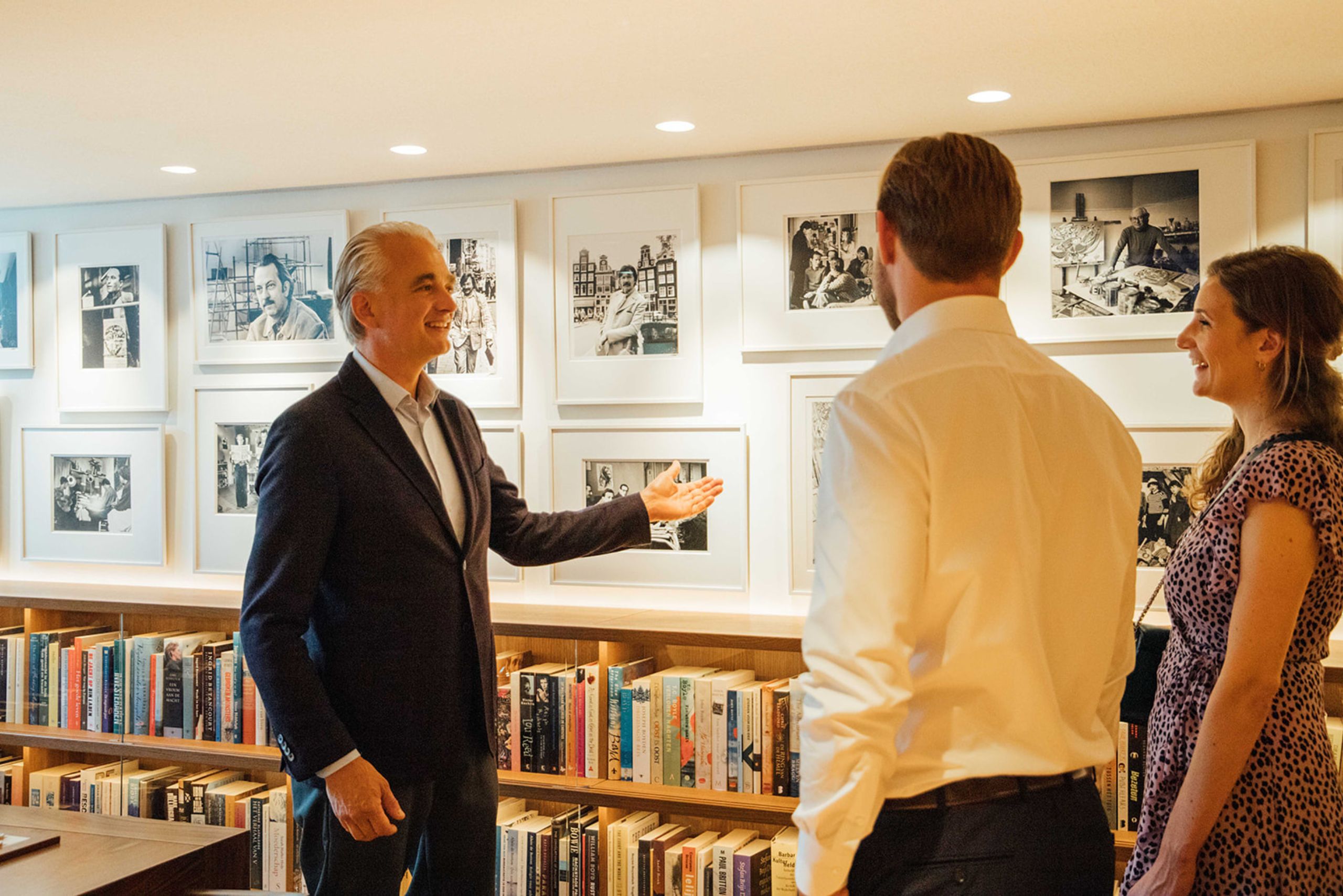
What makes Amsterdam the city it is today? Private guide Eduard Janssen of the Ambassade Hotel leads guests through celebrated landmarks and lesser-known stories, weaving past and present together in bespoke, personal tours.
What gives Amsterdam its distinctive character?
What has shaped the city—politically, economically, artistically and socially—and how does that heritage continue to resonate today? As a private guide, Eduard Janssen takes great pleasure in introducing guests to Amsterdam, a city he knows intimately. Architecture, history, art, literature or everyday life: any of these can serve as a starting point.
His tours are personal and tailored to each guest’s interests. Eduard combines a background in real estate with a broad and deeply rooted fascination for history, art and culture. He has worked for various (international) property organisations and has lived for the past 25 years in the Canal District, within walking distance of the Ambassade Hotel.
Eduard, what does it mean to you to guide our guests through Amsterdam?
It is a privilege to guide guests of the Ambassade Hotel. Amsterdam invites exploration—from its canals and hidden courtyards to museums such as the Rijksmuseum and the Van Gogh Museum. Every street, every building and every work of art tells a story.
Those who truly wish to understand the city must delve into its history and into the constant interaction between past and present. No two tours are ever the same. I adapt to my guests’ interests: the pace, the perspective and the desired level of depth vary from one person to another. The Ambassade Hotel is an ideal starting point for that journey.
You constantly connect past and present. Why is that so important?
You can only truly understand the city of today if you understand its past. Thanks to its strategic location, Amsterdam developed into an international centre of trade and finance. Its relative freedom attracted people, ideas and cultures from across the world, resulting in a city with a strong social and cultural infrastructure.
That open-minded spirit—visible in philanthropy, museums and civic initiatives—continues to underpin Amsterdam’s urban life to this day.
The Canal District is often seen as the defining image of the city. What makes this area so special to you?
The Canal District has been a UNESCO World Heritage Site since 2010, recognised for its exceptional urban planning. Created during the Dutch Golden Age, its canals and canal houses reflect both economic prosperity and a complex history of trade and colonial exploitation.
At the same time, this area served for centuries as a haven for religious minorities, publishers, artists and thinkers. I have lived here for 25 years, in the Nine Streets neighbourhood, close to the Ambassade Hotel. What continues to fascinate me is the way history and contemporary energy converge here.
Nearby, the Jordaan—with its strong local identity and iconic sites such as the Anne Frank House and the Westerkerk—also forms an indispensable part of the historic urban fabric surrounding the Canal District.
Which forces do you believe have shaped Amsterdam most profoundly?
Certain defining moments in history have made Amsterdam what it is today. The Alteration of 1578 brought about a religious and political transformation and laid the foundations for a relatively tolerant city. The Peace of Münster and the Treaty of Westphalia in 1648 strengthened Amsterdam’s position as an international trading hub. That spirit of openness remains palpable to this day.
Jewish history is also inseparable from the city’s identity. The nickname Mokum reflects that deep bond. A walk from the Ambassade Hotel to the Jewish Cultural Quarter demonstrates just how essential historical context is to truly understand Amsterdam.
Do you limit your tours to the historic centre?
Not at all. Depending on my guests’ interests, I also explore other neighbourhoods, often by bicycle. Take the NDSM Wharf in Amsterdam Noord, for example: once an industrial shipyard, it has been transformed into a vibrant cultural hub for artists and events.
The Zuidas is another area of interest—a modern district home to major financial and legal institutions, and still very much in development. Its train and metro station is an ideal departure point for excursions with guests to other Dutch and Belgian cities and museums.
Is there one place that brings everything together for you?
Without a doubt: Dam Square. It is the site where Amsterdam originated, with the construction of a dam in the river Amstel, symbolising the centuries-long struggle against water. The Dam grew into the city’s financial beating heart, where civic and religious buildings rose side by side.
Today, Dam Square serves as the symbolic national centre for commemorations and ceremonies.
What thought would you most like visitors to take with them?
Amsterdam is a city in constant transformation. Innovation, redevelopment and growth go hand in hand with public debate. It is precisely that dynamism that makes the city layered, contemporary and relevant.
At the same time, it is important to keep Amsterdam’s core values in mind: Valiant, Steadfast, Compassionate.
Additional Information
Amsterdam enjoys excellent direct rail connections to other Dutch and Belgian cities. In addition to tours in Amsterdam and museum visits, Eduard Janssen also offers private tours in Delft, Rotterdam, The Hague and a range of Belgian cities.
He also provides guided tours within the Ambassade Hotel itself, exploring the in-house COBRA art collection and its remarkable library. Further information can be found in the brochure at reception or on the hotel’s website.